 6 min read
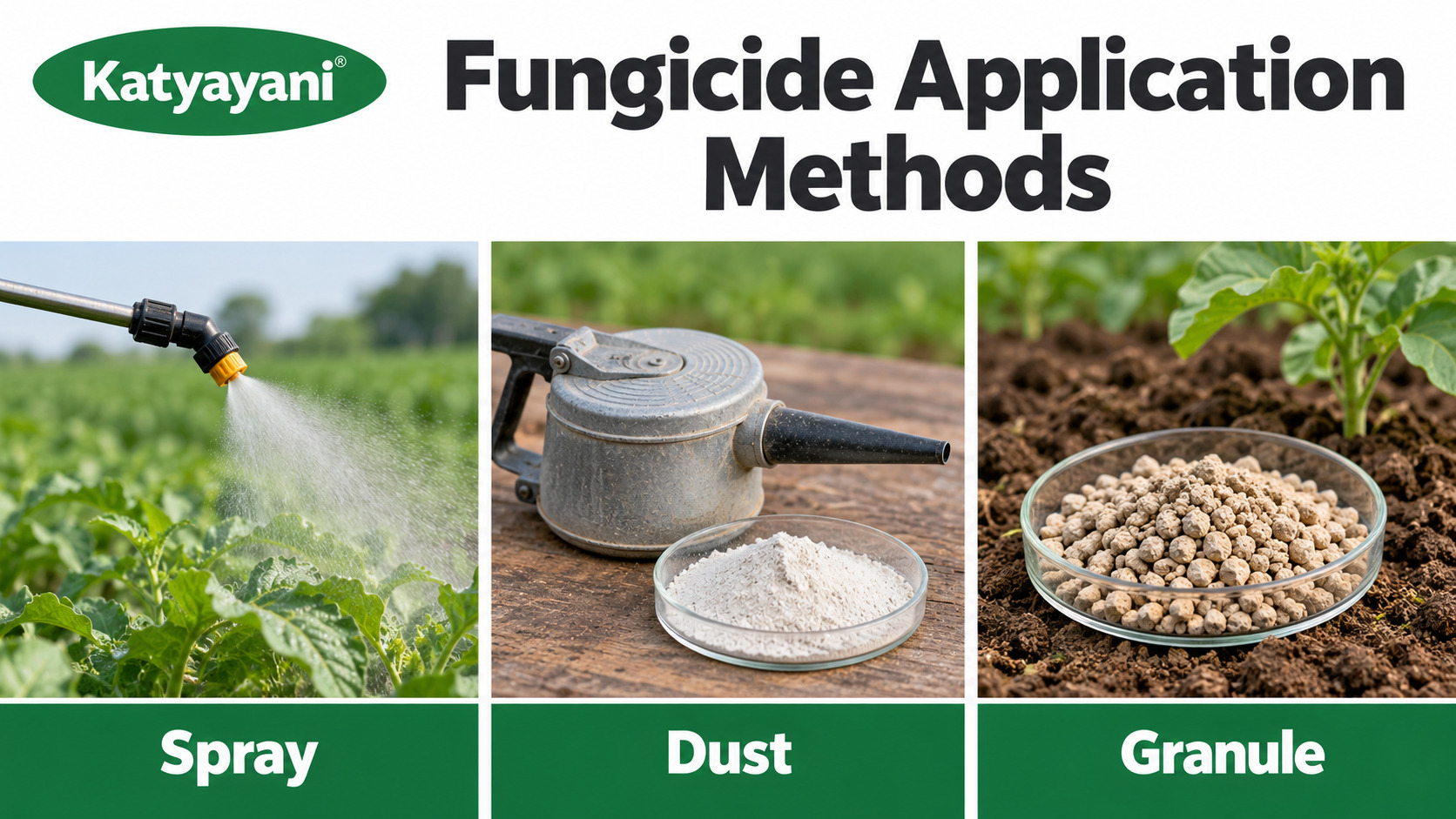
Match the method to where the disease lives. Use foliar spray for leaf diseases, seed treatment and soil drench for root and seed-borne diseases, and granules in the furrow at planting.
What are the main fungicide application methods?
| Method | Best for | When | Example products |
|---|---|---|---|
| Foliar spray | Leaf spots, blights, rusts, mildews | At first symptoms or before disease season | Mancozeb, Copper oxychloride, Hexaconazole |
| Seed treatment | Seed-borne and early soil-borne disease | Just before sowing | Thiophanate methyl, Trichoderma viride |
| Soil drench | Root rot, wilt, damping-off, collar rot | Nursery and early crop stage | Trichoderma viride, Pseudomonas fluorescens |
| Granules | Soil-borne disease | In the furrow at planting | Granular products as per label |
| Dust | Dry-weather foliar use, seed dressing | Dry, calm weather | Dusting sulphur as per label |
Which method is best for leaf diseases?
Foliar spray. It covers all leaf and stem surfaces. Contact fungicides form a protective film on the surface. Systemic fungicides move inside the plant and can stop early infection. Foliar sprays cannot reach vascular wilt or root rot, so do not use them for those.
When should you use seed treatment?
Use it when seed-borne disease or early soil disease is the risk, for example in paddy, wheat, pulses and vegetables. Dry-treat or slurry-coat the seed just before sowing. If you also use Rhizobium, PSB or KMB cultures, follow the order and gap given in our biofertilizer guide for chana and other rabi pulses.
When is soil drench better?
For root rot, collar rot and damping-off. Pour the fungicide solution around the base of plants or over nursery beds so it reaches the roots. See how this works in nurseries in our rabi onion nursery guide.
When to use granules and dusts?
- Granules go in the furrow at planting or into flooded rice fields. They protect roots for longer.
- Dusts suit dry weather and seed dressing. They are usually less effective than sprays on leaves.
- Never put a dust into a spray tank. It will not mix.
What weather and timing rules should you follow?
- Spray in early morning or late afternoon. Avoid noon heat and wind.
- Do not spray before rain. Contact fungicides like mancozeb can wash off, while many systemic ones stay in the plant.
- Fungus grows fast in humid, 20-30°C weather: scout more often then.
- Typical spray gap is 7-14 days, based on disease pressure and weather.
- Spray before key stages such as flowering, fruiting or tillering when the crop is most at risk.
How to get dose and coverage right?
- Measure the dose from the label. Overdose can burn the crop; underdose lets disease survive.
- Calibrate your sprayer. Use a knapsack sprayer for vegetables, a power sprayer for field crops, and a flat-fan nozzle for even coverage.
- Rotate fungicide groups to slow resistance, especially for thiophanate methyl or carbendazim.
- Do a jar test before mixing two products.
Which method for which crop? Quick guide
| Crop | Common disease | Method to use first |
|---|---|---|
| Paddy, wheat | Seed-borne smut, blast | Seed treatment, then foliar spray |
| Tomato, chilli, brinjal nursery | Damping-off | Soil drench |
| Grapes, tomato | Powdery mildew, blight | Foliar spray |
| Onion nursery | Damping-off | Soil drench |
Conclusion
The right fungicide used the wrong way still fails. Pick the method by where the disease lives, spray at the right time and weather, keep to the label dose, and rotate groups. That saves money and protects yield.
Why trust this guide
Written by Team Katyayani, Editorial Team at Katyayani Organics. Cross-checked against published research and university extension programs.

Leave a Comment