The people behind Krishi Gyan
Every article on Krishi Gyan is written by agronomists, scientists, and field experts who live and breathe Indian agriculture. Meet the people turning research into practical advice.
1 author|54 articles published
Team Katyayani
Editorial TeamThe Katyayani Organics editorial team brings you the latest in agricultural knowledge and farming best practices.
- PM Fasal Bima Yojana: Eligibility, Benefits and How to Apply
- Onion Farming in India: Complete Guide to Planting, Fertilizer and Harvesting
- How to Start an Agriculture Business in India: Complete Guide (2026)
All articles by Team Katyayani

PM Fasal Bima Yojana: Eligibility, Benefits and How to Apply
PM Fasal Bima Yojana (PMFBY), launched on 18 February 2016, protects farmers against natural crop losses. Farmers pay a premium of 2% for Kharif, 1.5% for Rabi, and 5% for annual commercial and horticultural crops. All farmers, including tenants and sharecroppers, can apply voluntarily through a bank, CSC, insurance agent, or the official PMFBY portal. Report individual crop losses within 72 hours via the Crop Insurance App or helpline 14447.

Onion Farming in India: Complete Guide to Planting, Fertilizer and Harvesting
Onion in India is grown in three seasons: kharif, late kharif and rabi. Rabi is the main season and gives the best storable bulbs. Raise seedlings on raised nursery beds (5-7 kg seed per hectare, roughly 2-3 kg per acre), transplant 35-50 day old seedlings at 15 x 10 cm, apply about 110:40:60 kg NPK per hectare plus sulphur for rabi, keep thrips and purple blotch under control, stop irrigation 10-15 days before harvest, and cure bulbs properly before storage.

How to Start an Agriculture Business in India: Complete Guide (2026)
To start an agriculture business in India, (1) pick one model that matches your land, skill and local demand, (2) write a simple business plan with costs and buyers, (3) choose a legal structure and register on Udyam (free) and GST if your turnover or buyers require it, (4) get activity-specific licences such as a pesticide, fertilizer or seed dealer licence, FSSAI for food, or a DGCA remote pilot certificate for drones, and (5) apply for credit-linked support such as the Agriculture Infrastructure Fund, AC&ABC, PMFME or Mudra through your bank. Start small, sell before you scale.

Agriculture Subsidy Schemes in India: Eligibility, Benefits and How to Apply (2026 Guide)
Agriculture subsidy schemes in India are central and state government programmes that give farmers direct cash, cheaper credit, insurance, or a part of the cost of inputs and equipment. The biggest ones are PM-KISAN (Rs 6,000 per year), PMFBY (farmer pays only 2% premium for Kharif, 1.5% for Rabi), Kisan Credit Card loans at an effective 4% interest on prompt repayment, and 45-55% subsidy on drip and sprinkler systems. Most schemes need Aadhaar, a bank account linked to Aadhaar, and land records. The 24th PM-KISAN installment had not been officially dated as of 9 October 2026.

Marigold Flower Farming: Complete Guide to Cultivation, Season and Yield
Marigold grows best in well-drained loamy soil with pH around 7.0-7.5 and mild weather. Raise seedlings in a nursery, transplant them at about one month old, pinch the main shoot around 30-40 days after transplanting, and start picking flowers about 60 days after planting. Tamil Nadu Agricultural University (TNAU) reports an average yield of about 18 tonnes of flowers per hectare (roughly 7 tonnes per acre), though actual yield varies with variety, season and management.
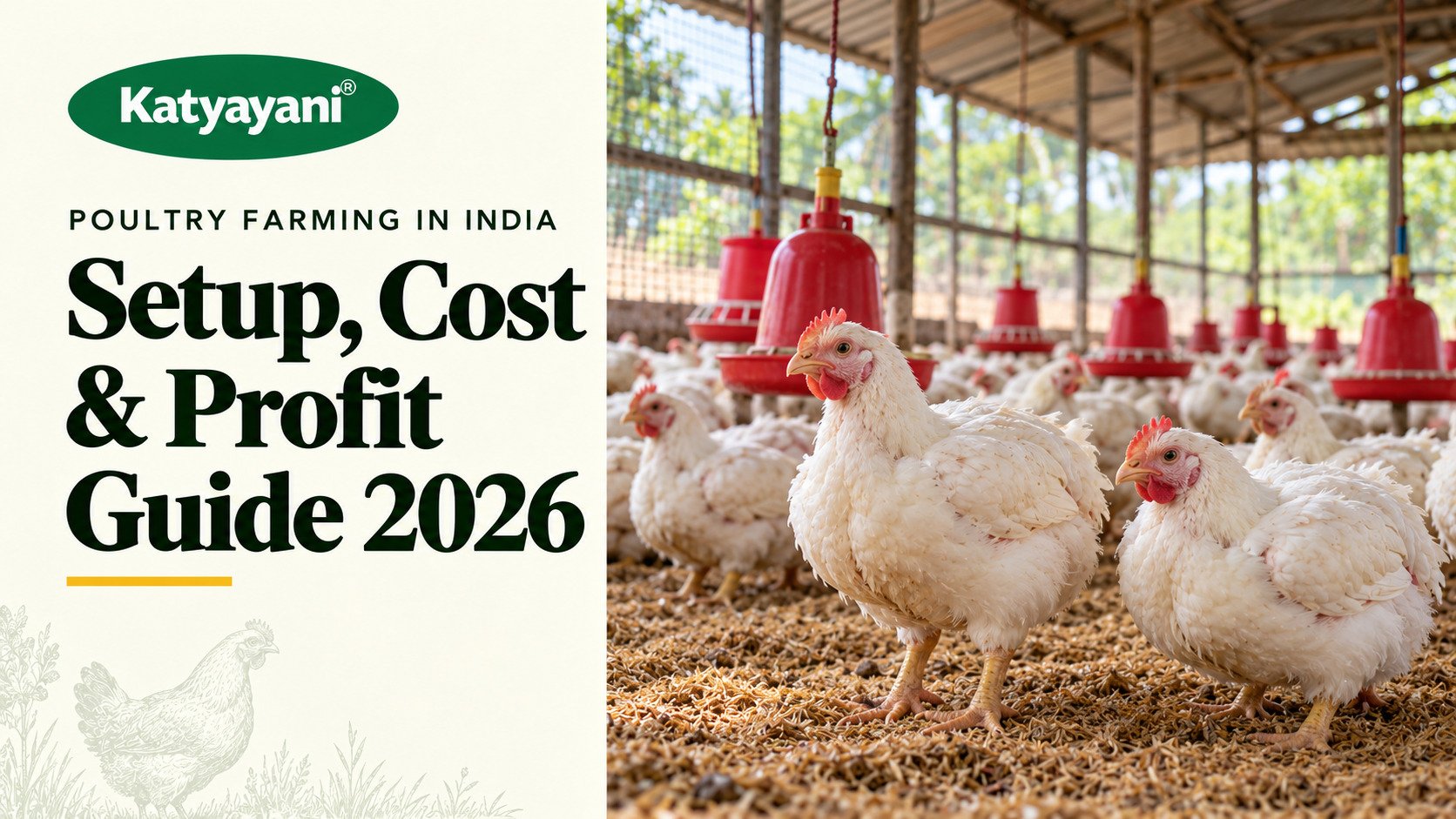
Poultry Farming in India: Complete Guide to Setup, Cost and Profit
Poultry farming means raising chickens (or ducks, quail, turkey) for meat, eggs or both. Broilers give the fastest cash turnover (sale in about 5-6 weeks), layers give steady daily income but need much more capital, and improved desi birds such as Vanaraja, Gramapriya or CARI-Nirbheek suit low-investment backyard farming. Plan about 1 sq ft of floor per broiler, feed is the biggest cost, and profit depends mainly on feed conversion, mortality and the selling price in your local market.

Rainy Season Vegetables: Best Leafy Vegetables to Grow in India
Amaranth (chaulai) is the safest leafy crop for the rainy season, because it is a warm-season crop that can be sown through the year. Coriander and methi can be sown in June-July in suitable regions such as Tamil Nadu (per TNAU), but only on well-drained raised beds. Palak (spinach beet) and lettuce are cool-season leaning and are better sown toward the end of the monsoon (August-September onwards), unless you choose a heat- and humidity-tolerant variety. Whatever you grow, drainage and seed treatment matter more than any spray.
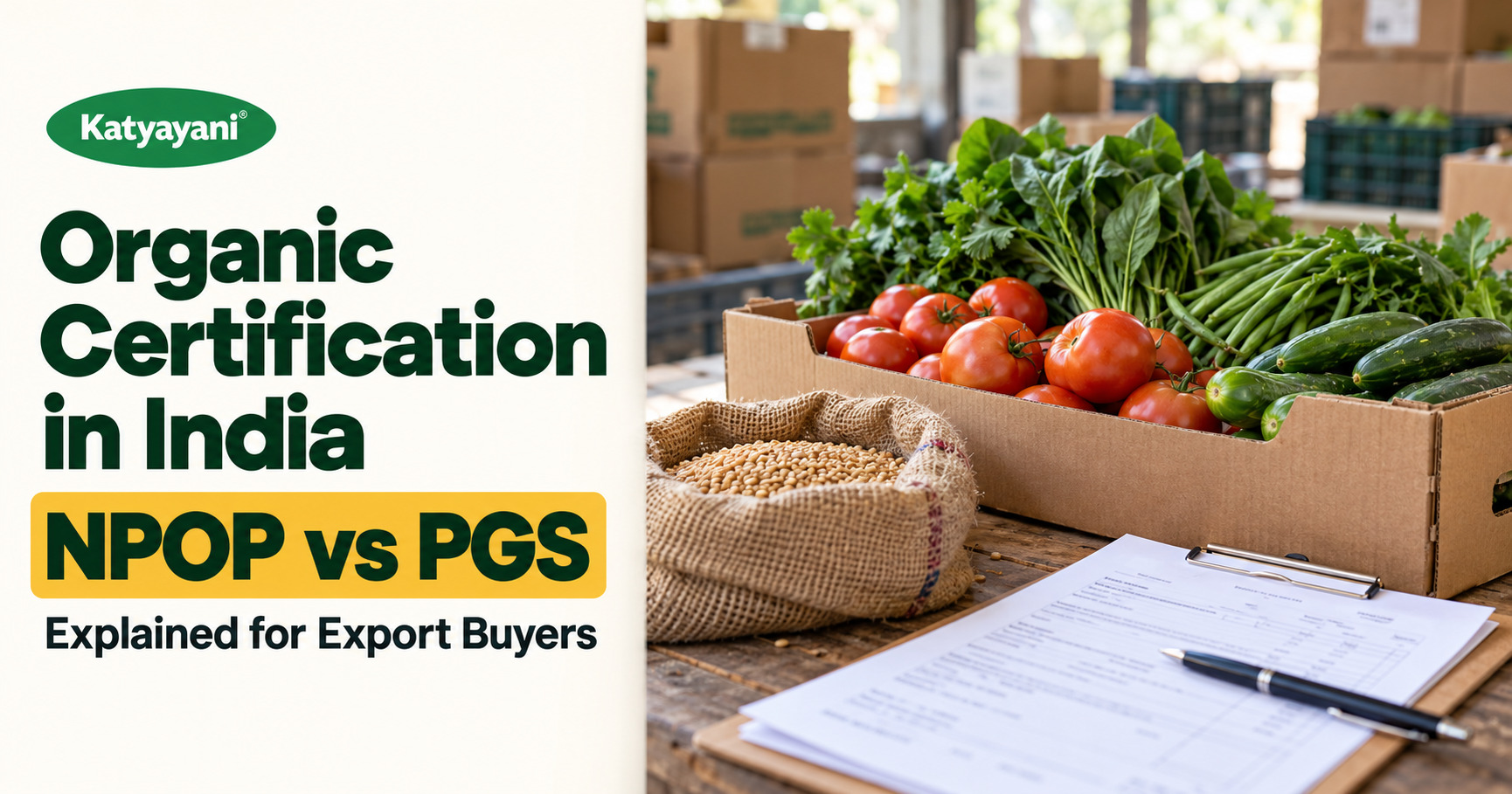
Organic Certification in India: NPOP vs PGS Explained for Export Buyers
NPOP is India's third-party organic certification run under APEDA, and it is the only Indian organic certification valid for export. PGS-India is a low-cost peer-group system for the domestic market only; PGS produce cannot be exported as organic. For the EU, NPOP is recognised as equivalent; for the USA, you need a USDA-accredited certifier.
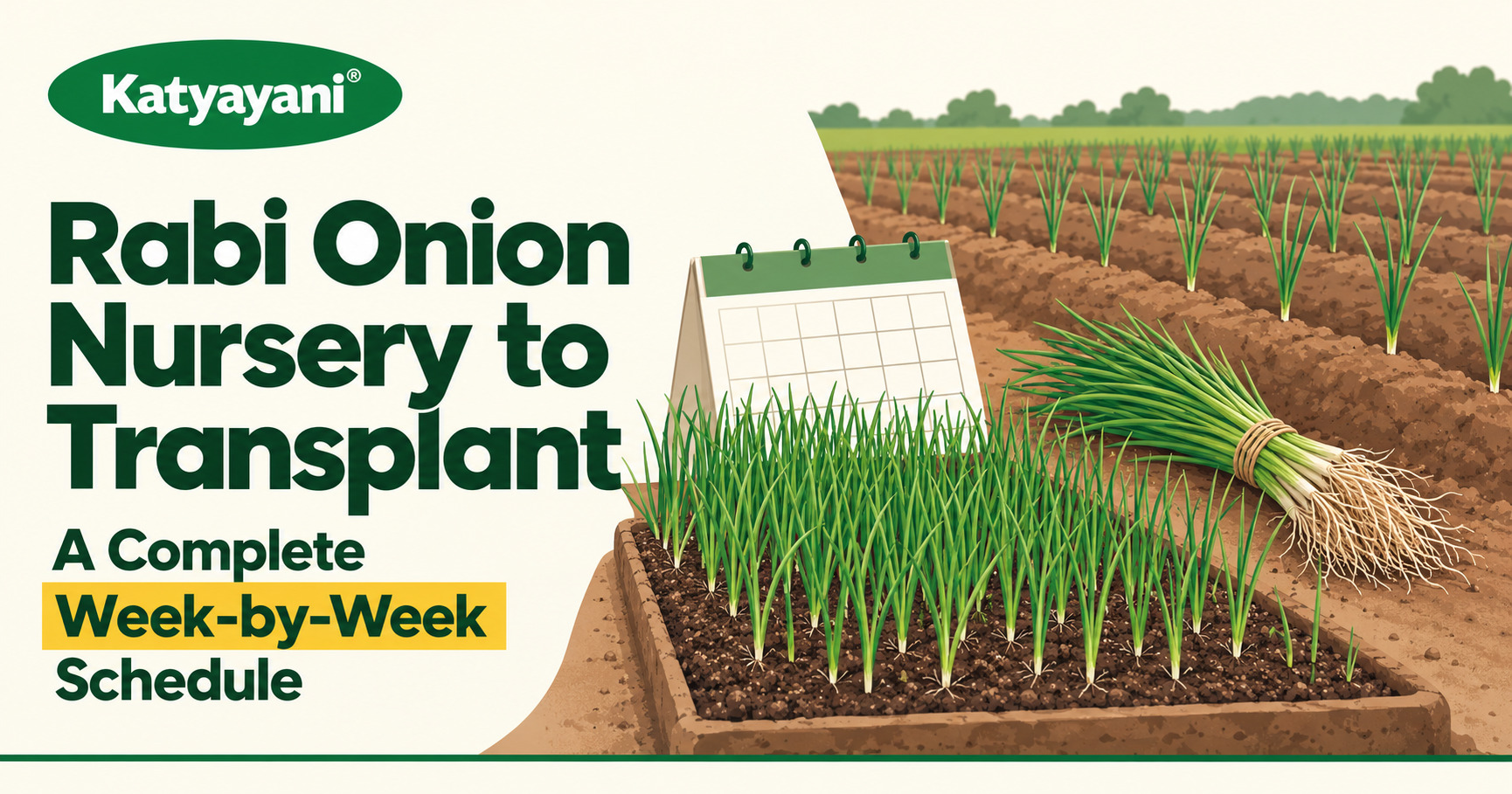
Rabi Onion Nursery to Transplant: A Complete Week-by-Week Schedule
Sow a rabi onion nursery from October to mid-November on raised beds 15 cm high and 1.2 m wide. About 5 to 7 kg of treated seed on 0.05 hectare of nursery raises seedlings for one hectare. Transplant 50 to 55 day old seedlings from December to the first week of January at 15 x 10 cm spacing.
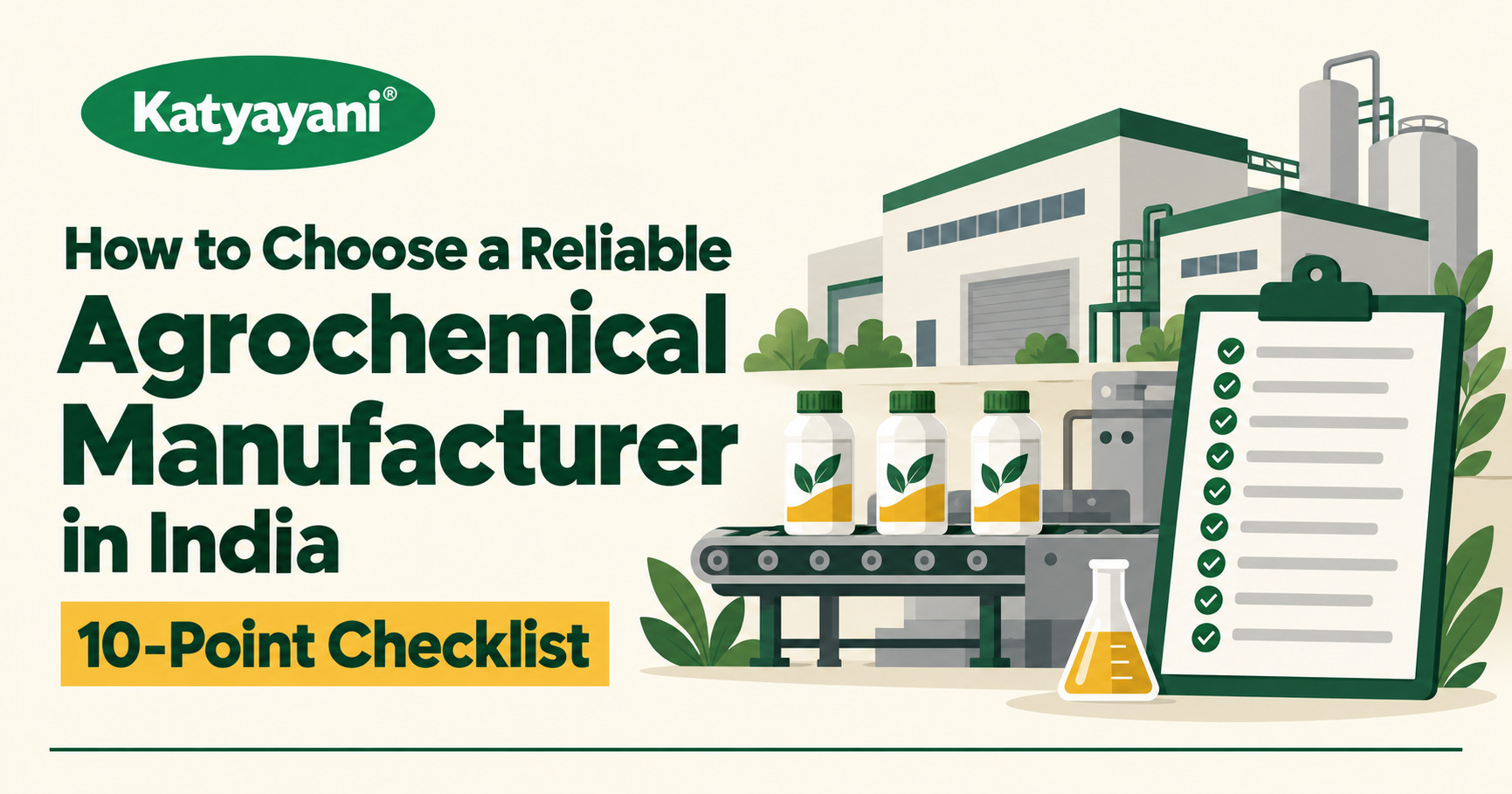
How to Choose a Reliable Agrochemical Manufacturer in India: 10-Point Checklist
A reliable agrochemical manufacturer in India holds CIBRC registration for each pesticide, a valid state manufacturing licence, FCO registration for fertilizer products, an in-house QC lab that issues batch-wise certificates of analysis, and ISO certification. Also check label compliance, supply capacity, credit terms, technical support and that no banned molecule is sold.

Buying Agri Inputs on GeM: A Practical Guide for Institutions and Government Buyers
Institutions can buy fertilizers, pesticides, bio-inputs and seeds on GeM using direct purchase (up to ₹50,000), L1 purchase after comparing at least three manufacturers (above ₹50,000, up to the applicable limit) or bid/reverse auction for larger orders. Register as a buyer, write clear specs with CIBRC or FCO compliance, check the OEM, inspect on delivery and issue CRAC.

How to Start an Agri-Input Shop in 2027: Licences, Capital and Margins
To start an agri-input shop, you need a seed licence, fertilizer registration under the FCO and a pesticide sale licence from your state agriculture department, plus a qualified person (agri degree, diploma, DAESI or approved course). Indicative capital is about ₹3 lakh to ₹15 lakh. Subsidised fertilizers earn thin fixed margins; profit comes mainly from pesticides, bio-inputs and specialty nutrition.

Indoor Plant Care in Winter: Light, Watering and Feeding
In winter, move indoor plants to the brightest window, water only when the top 2 to 5 cm of soil is dry, and stop or halve feeding until spring. Keep them between about 15 and 24°C (60 to 75°F), away from heaters and cold glass, and raise humidity with trays or grouping. Check for spider mites and fungus gnats weekly.

Overwintering Herbs Indoors: A Guide for US, UK and EU Gardeners
Bring tender herbs such as rosemary, bay, lemon verbena and basil indoors before nights fall below about 45 to 50°F (7 to 10°C). Pot them in free-draining mix, give a south-facing window or 12 to 14 hours of grow light, keep them at 50 to 65°F (10 to 18°C), and water only when the top inch is dry.

Wheat Yellowing After First Irrigation: Zinc, Sulphur, Manganese or Urea Timing?
Wheat that yellows after the first irrigation usually has one of five causes: temporary waterlogging, nitrogen shortage from late urea, manganese deficiency on light soils, sulphur deficiency on sandy soils, or zinc deficiency. Check which leaves yellow first and the pattern, then correct with drainage, urea, or a manganese, zinc or sulphur dose.
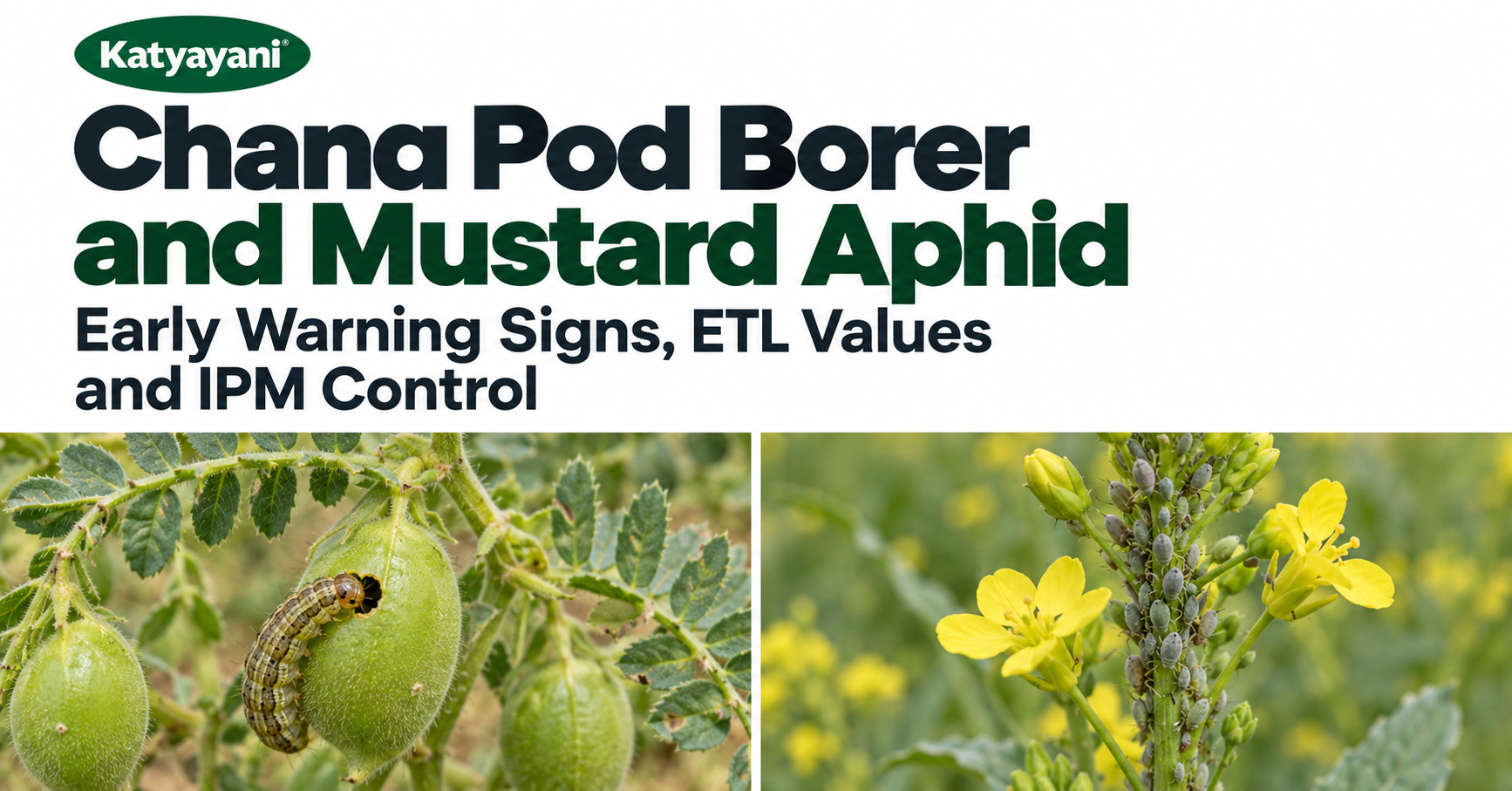
Chana Pod Borer and Mustard Aphid: Early Warning Signs, ETL Values and IPM Control
For chana pod borer control, install 5 pheromone traps and 20 bird perches per hectare at flowering, and act when you find one mature larva per metre row or 2 young larvae per 10 plants. For mustard aphid, spray only when 10% of plants carry 26 to 28 aphids on the top 10 cm of shoot.

Frost and Cold Wave: How to Protect Field Crops and Garden Plants
Frost protection in crops means keeping plant tissue above freezing on cold, clear, still nights. The simplest steps are a light irrigation in the evening when frost is forecast, covering nurseries and young plants overnight, and, for mustard, gram and rajma, a spray of 0.1% sulphuric acid or 500 ppm thiourea as advised in agromet bulletins.

Winter Kitchen Garden Feeding Schedule (Compost + Liquid Feed)
A simple winter kitchen garden fertilizer schedule is: mix 25 to 30 percent compost or vermicompost into the potting mix at sowing, top-dress 100 to 150 g vermicompost per 12 inch pot every 3 to 4 weeks, and give a diluted liquid feed such as seaweed extract every 10 to 15 days. Feed less in December and January.

Winter Flowers in Pots: Marigold, Petunia and Chrysanthemum Care
Marigold, petunia and chrysanthemum are the easiest winter flowers for pots in India. Give them 5 to 6 hours of sun, a free-draining mix with compost, 8 to 12 inch pots, and a potassium-rich feed once buds form. Pinch marigold and petunia early for bushy plants and deadhead spent blooms weekly.

Water-Soluble Fertilizer Buying Guide for Drip and Bulk Users
Water-soluble fertilizers are fully soluble NPK, potash and calcium grades for drip and foliar use. Buy 19:19:19 and 12:61:0 for early growth, 0:52:34 and 13:0:45 for flowering and fruit set, 0:0:50 and calcium nitrate for fruit quality. In bulk, check FCO grade, clear solubility, batch, COA and cost per kg of nutrient.

Agri Schemes Calendar 2027: Every Deadline in One Place
The key agriculture scheme dates for 2027 are: PMFBY rabi cut-off on 31 December 2026, rabi procurement registration from January to March, Union Budget on 1 February, PM-KUSUM completion deadline on 31 March, wheat procurement from March to June, kharif MSP around May or June, PMFBY kharif cut-off usually 31 July, and rabi MSP around October.

Potato Late Blight Control: A Prevention Calendar to Follow Before the Disease Hits
Potato late blight control depends on spraying before symptoms appear. Start a protective mancozeb or chlorothalonil spray (0.2 to 0.25%) when forecasts show 10 to 20 C with high humidity or fog for more than 18 hours. At the first lesion, switch to a systemic such as cymoxanil + mancozeb or dimethomorph, repeating every 7 to 10 days.

Agri Drone Subsidy 2026: Namo Drone Didi and SMAM Explained
Drone subsidy for farmers comes mainly from two central schemes. Under SMAM, individual farmers get 40% to 50% of the drone cost (up to ₹4 lakh or ₹5 lakh), FPOs up to 75%, and KVKs and ICAR bodies 100% up to ₹10 lakh. Under Namo Drone Didi, women SHGs get 80% up to ₹8 lakh with a full drone package.

National Mission on Natural Farming: Subsidy and How to Apply
Under the National Mission on Natural Farming (NMNF), a farmer in a selected cluster gets ₹4,000 per acre per year for two years, for up to one acre, to shift to chemical-free farming. You join through your gram panchayat's natural farming cluster, via the block agriculture office, ATMA or your village Krishi Sakhi, not by an open online form.
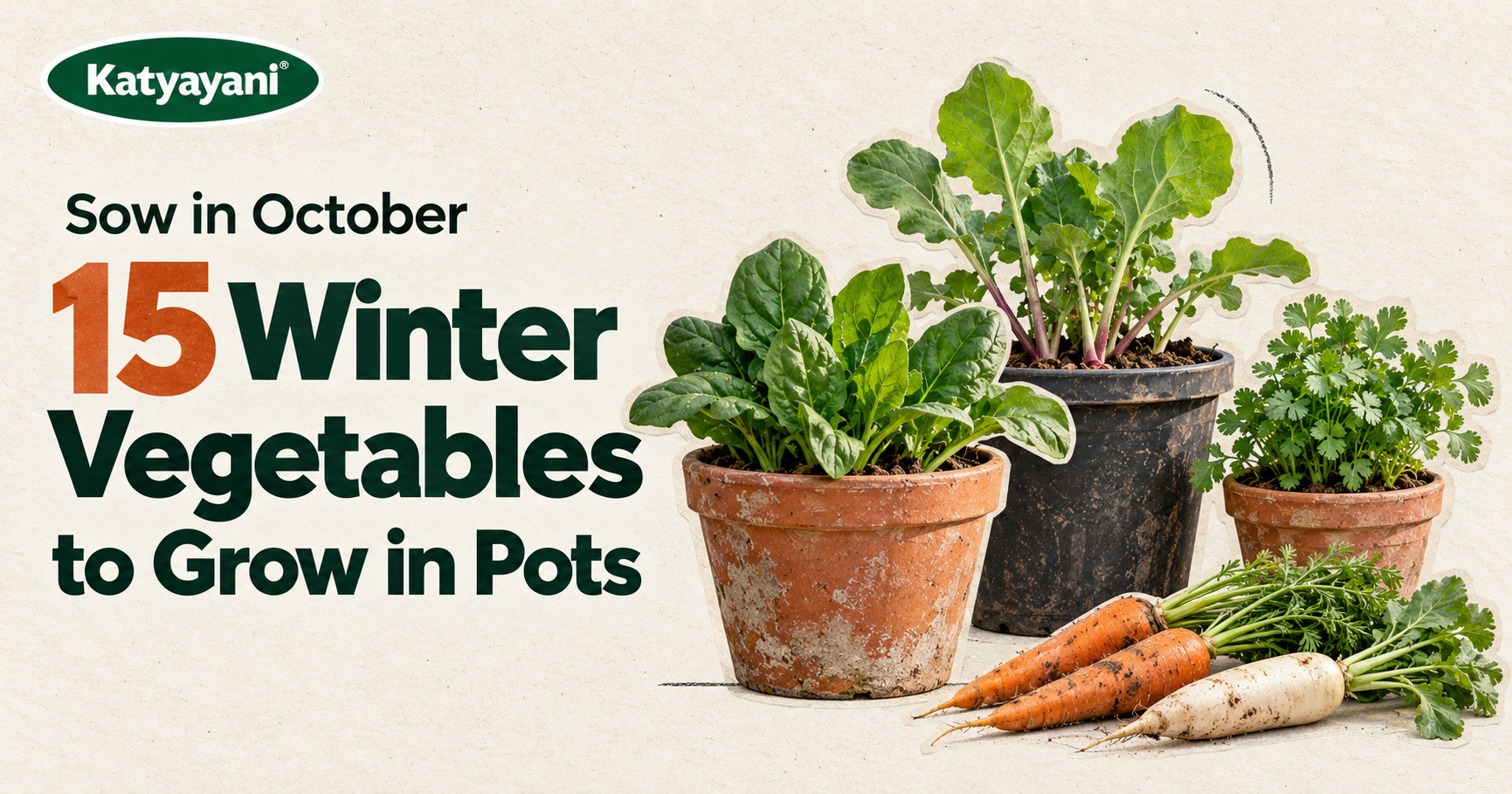
15 Winter Vegetables to Grow in Pots (Sow in October)
In the Indian plains, October is the month to sow spinach, methi, coriander, radish, carrot, beetroot, turnip, mustard greens, lettuce, peas and spring onion directly in pots, and to raise cauliflower, cabbage, broccoli and knol-khol seedlings. Use 6 to 8 inch pots for greens, 12 inch pots for roots, and 12 to 14 inch pots for cabbage-family crops.

How to Get a Pesticide and Fertilizer Dealer Licence (State-wise 2026)
To get a pesticide licence in India, you (or an employee) need a science or agriculture degree or an approved diploma such as DAESI. You then apply to your state agriculture department, usually online, with ID, shop proof, principal certificates from suppliers and the fee. A fertilizer licence is a separate authorisation under FCO 1985 using Form A1.
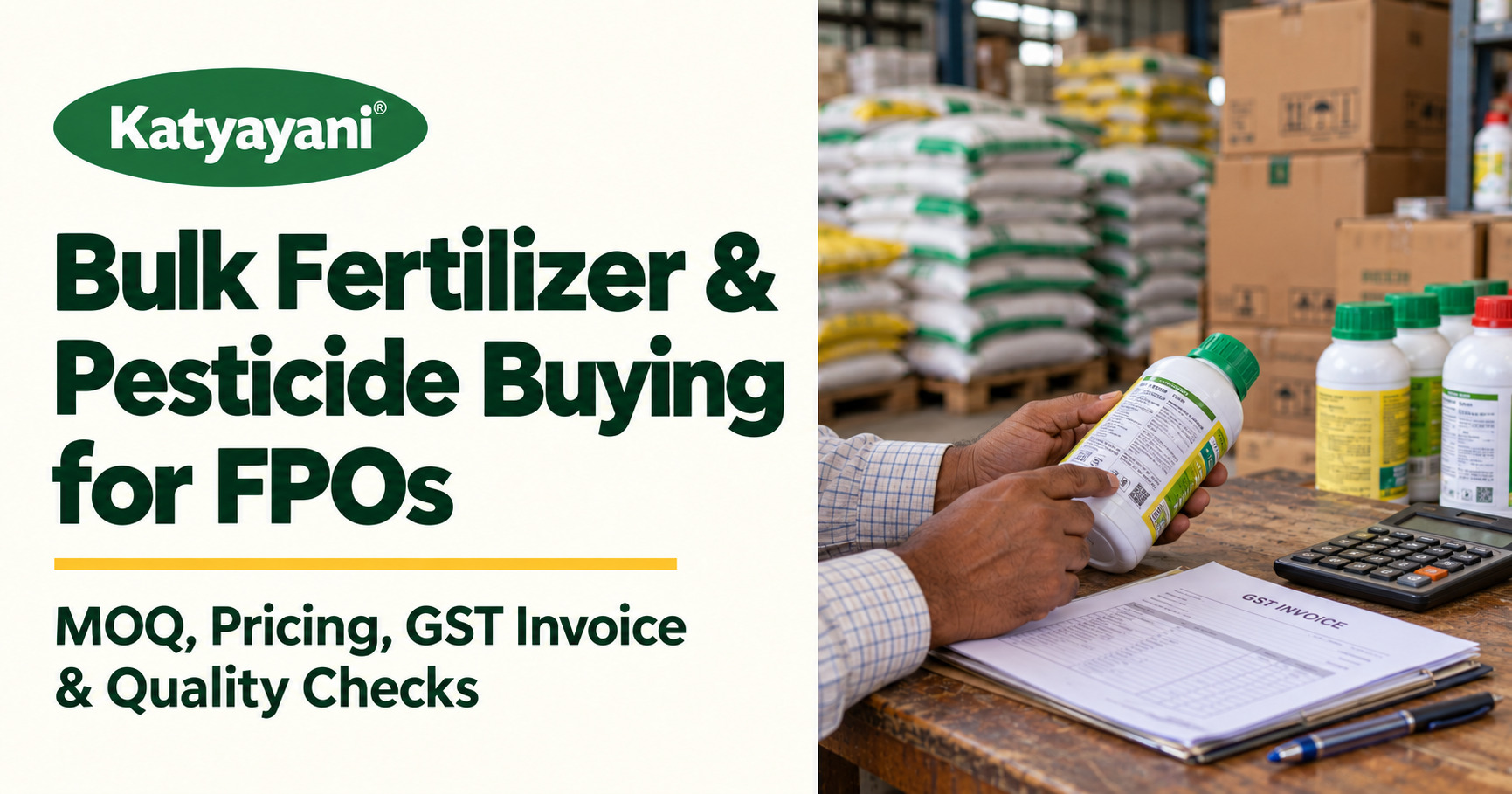
Bulk Fertilizer and Pesticide Buying for FPOs: MOQ, Pricing, GST Invoice and Quality Checks
To buy fertilizers and pesticides in bulk, an FPO needs its own fertilizer, pesticide and seed licences, a GST registration and a licensed supplier. Chemical pesticides carry 18% GST, while fertilizers, FCO micronutrients and notified bio-pesticides carry 5%. Check registration numbers, batch, expiry and a certificate of analysis for every lot.
Agri Input Dealer Stock List: What Retailers Should Stock for Rabi Season
For rabi, an agri-input retailer should stock basal fertilizers (DAP, NPK complexes, urea, SSP), zinc and sulphur, seed treatment fungicides and bio-fertilizers before sowing, then wheat herbicides by November, and fungicides and aphid insecticides for December to February. Match quantities to local crop area, last season's sales and credit capacity.
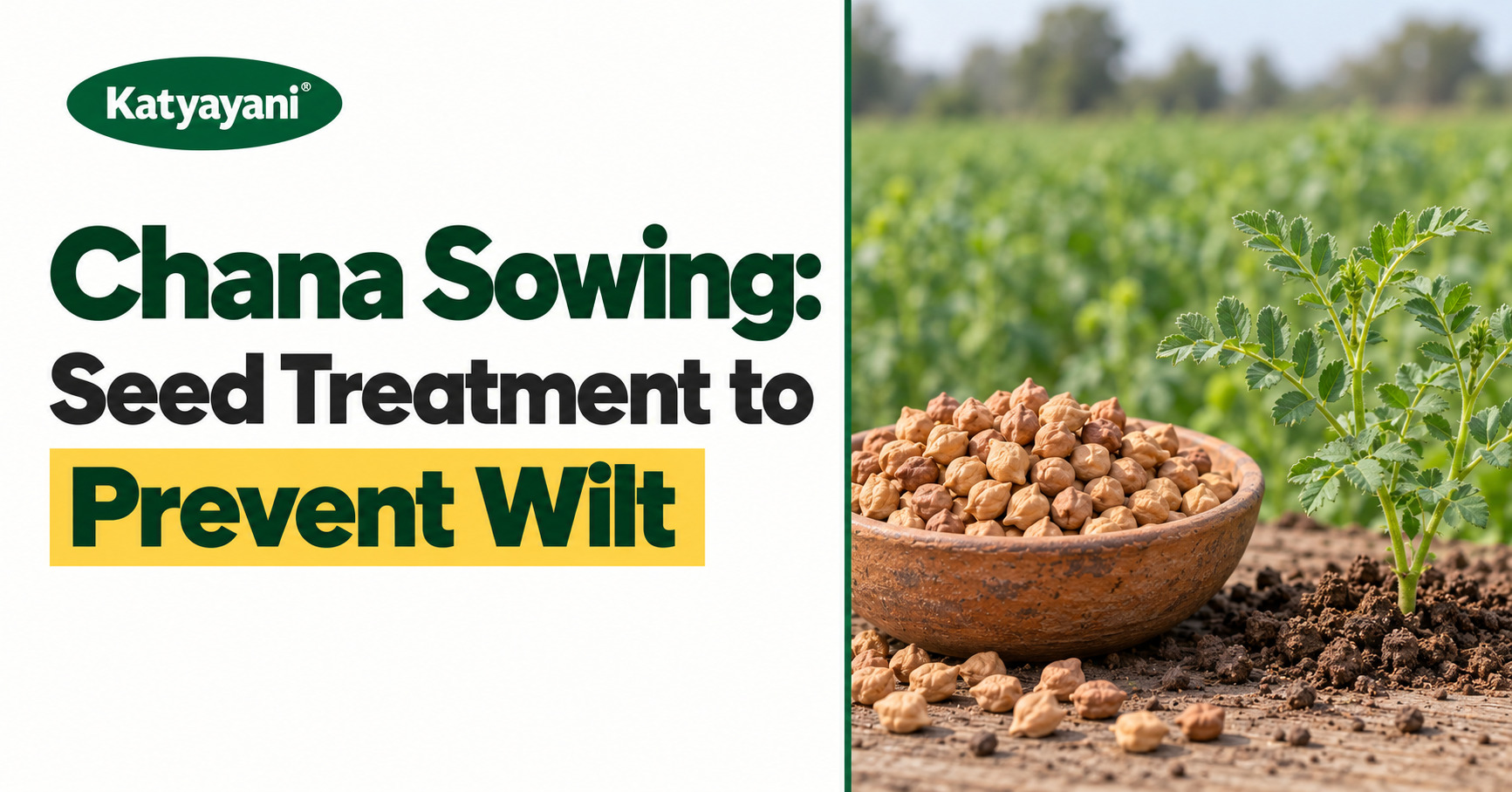
Chana Sowing: Seed Treatment to Prevent Wilt
Treat chana seed in this order: a fungicide or Trichoderma first, an insecticide if termites are a problem, and Rhizobium plus PSB last, just before sowing. Typical doses are carbendazim-based fungicide at 2 to 2.5 g per kg, Trichoderma at 4 to 10 g per kg, and Rhizobium and PSB at about 200 g per 10 kg seed.

Mustard Sowing and Fertilizer Schedule for High Oil Yield
For irrigated mustard, ICAR recommends 80 kg N, 40 kg P2O5, 40 kg K2O and 40 kg sulphur per hectare. Apply half the nitrogen and all P, K and S at sowing, and the rest of the nitrogen at the first irrigation, 30 to 45 days after sowing. Add zinc and boron where soils are deficient.

Soil Testing Before Rabi: How to Read Your Soil Health Card
To read a Soil Health Card, check three parts: soil condition (pH, EC, organic carbon), nutrient status (N, P, K, S and five micronutrients rated low, medium or high) and the crop-wise fertilizer recommendation. Low means add more of that nutrient, high means you can cut back. Then convert kg of nutrient into fertilizer bags.
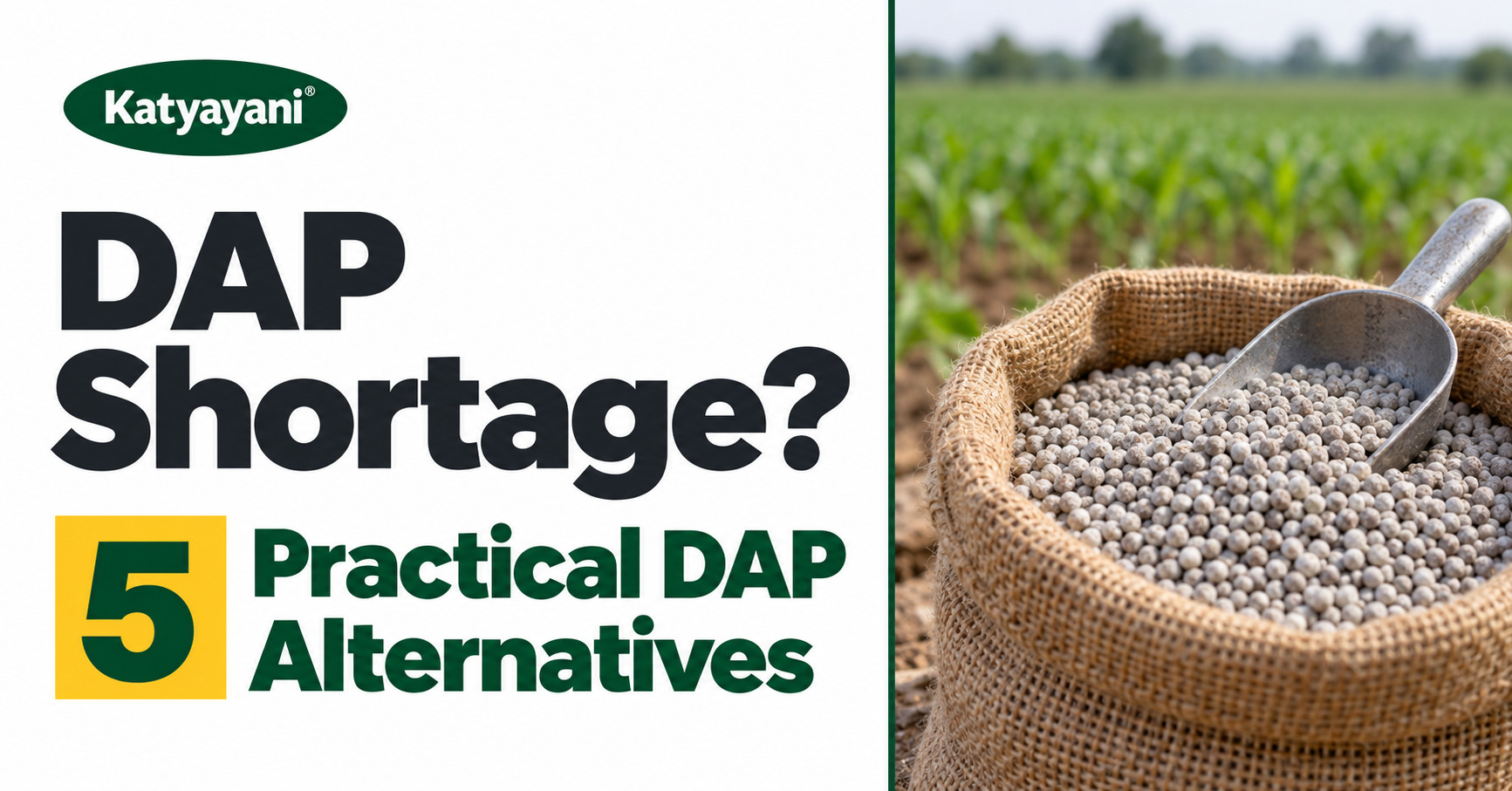
DAP Shortage? 5 Practical DAP Alternatives (SSP, NPK 12:32:16, Nano DAP) Compared
The most practical DAP alternatives are SSP (3 bags per DAP bag, plus about 20 kg extra urea), NPK 12:32:16 (about 1.5 bags), NPK 10:26:26 (about 1.8 bags) and TSP (1 bag, plus urea). Nano DAP supports seed treatment and foliar feeding but cannot replace the phosphorus that basal DAP supplies.

Wheat Sowing Planner: Sowing Time, Seed Rate, Varieties and Basal Dose by Zone
Sow timely wheat from 1 to 15 November in the north-western plains and 10 to 20 November in central and eastern India, at 100 kg seed per hectare (40 kg per acre). For late sowing after 25 November, raise seed to 125 kg per hectare and choose a late-sown variety recommended for your zone.

PMFBY Rabi Enrollment 2026-27: Premium, Deadline and Claim Process
PMFBY rabi registration for 2026-27 is open through banks, CSCs, insurance agents and pmfby.gov.in. Farmers pay only 1.5% of the sum insured for rabi food and oilseed crops and 5% for commercial or horticulture crops. The cut-off in most states is 31 December 2026, but check your state's notification. Report local damage within 72 hours.

PM-Kisan Next Installment: Status Check, eKYC and Payment Fixes
The latest PM-Kisan payment is the 23rd installment, released on 20 June 2026 to 9.44 crore farmers. The 24th installment is not yet released as of 24 September 2026 and falls in the August to November period. Check status on pmkisan.gov.in under Know Your Status using your registration number or Aadhaar and OTP.
Rabi MSP 2027-28: Crop-wise Rates, Trend and What Changed
As of 24 September 2026, the Cabinet has not yet announced rabi MSP for marketing season 2027-28. The latest confirmed rates (RMS 2026-27) are wheat ₹2,585, barley ₹2,150, gram ₹5,875, masur ₹7,000, rapeseed-mustard ₹6,200 and safflower ₹6,540 per quintal. The new rates usually come in October.

Terrace garden soil mix: a recipe that drains and feeds
A working terrace mix is roughly 40 percent coco peat for water holding, 30 percent compost for nutrition and biology, and 30 percent perlite or coarse sand for drainage and air. Garden soil should be no more than a quarter of the total, and can be left out completely. The mix must drain within a mi

Trichoderma and Beauveria for gardeners: using bio-agents at home
Trichoderma protects roots from soil disease and goes into the potting mix at planting. Beauveria bassiana kills soft-bodied insects and is sprayed on leaves. Both are living fungi, so they need cool storage, evening application, and a gap of at least a week from any chemical fungicide.
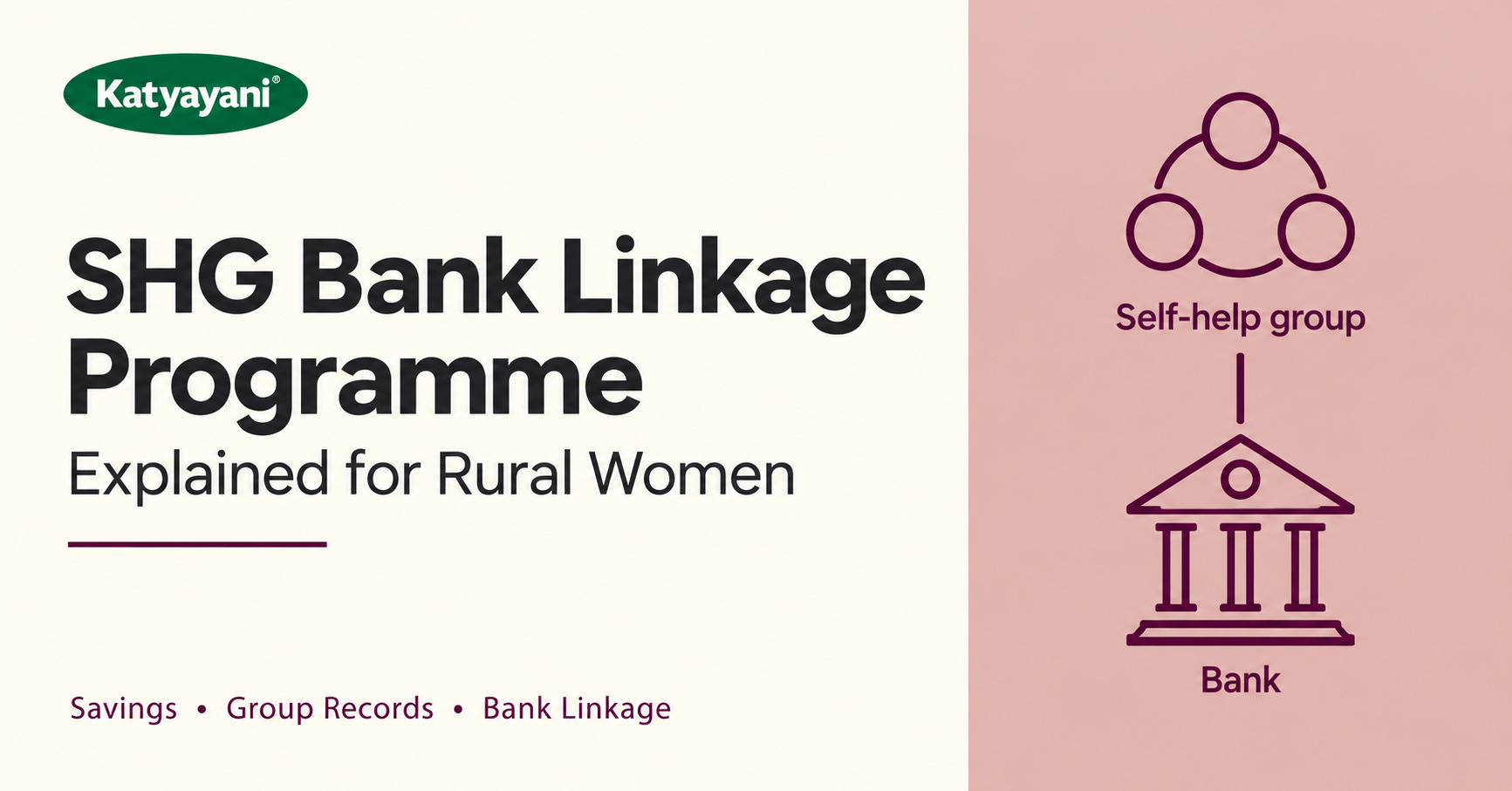
SHG Bank Linkage Programme Explained for Rural Women
The SHG Bank Linkage Programme is how a village savings group becomes a bank borrower. NABARD started it in 1992-93 with a pilot of around 500 groups, and it is now the largest programme of its kind in the world. There are two linkages, not one. Savings linkage is opening the group's bank account, a

Neem oil in the home garden: correct dilution and when not to use it
For a 3000 ppm azadirachtin neem oil, use 2 to 3 ml per litre of water for most garden pests. Higher concentrations need proportionally less: around 1 ml per litre at 10000 ppm, and 0.5 to 1 ml per litre at 50000 ppm. Always add an emulsifier, spray in the evening, and never spray a plant that is al
SHG vs FPO: Which Is Better for Farmers?
Neither is better. They solve different problems. An SHG solves your credit problem: ten to twenty members, savings first, collateral-free loans up to Rs 20 lakh, no registration needed. An FPO solves your price problem: at least 300 farmers, registered as a company or cooperative, buying inputs and

Organic pest control for home gardens: what works without chemicals
Organic pest control works when you catch the problem early. Neem oil handles soft-bodied insects such as aphids, whitefly and thrips. Fungal bio-insecticides like Beauveria bassiana and Verticillium lecanii handle the same pests more thoroughly but take a week. Insecticidal soap kills on contact. N

Self Help Group Loan for Agriculture Activities: Farmer Guide
Yes, an SHG loan can be used for farming. RBI classifies SHG loans taken for crop and allied purposes under agriculture for priority sector lending, treating the group as a set of individual farmers and applying the limits per member. The catch is repayment timing. Most SHG credit is structured as a

Root rot in containers: diagnosis and recovery
Healthy roots are white or cream, firm, and smell of soil. Rotted roots are brown or black, soft enough to squash between two fingers, and smell sour. If the outer layer slips off leaving a thin thread, that root is dead. Cut away everything rotted, repot into fresh dry mix, and do not water for sev

Yellow leaves on houseplants: a nutrient deficiency chart
Start with one question: are the old leaves yellowing, or the new ones? Nutrients that move inside the plant, including nitrogen, magnesium and potassium, cause symptoms on old leaves first. Nutrients that cannot move, including iron, zinc and calcium, show on new growth first. That single split nar

SHG Loan for Women Farmers: Complete Guide
The bank does not lend to you. It lends to your group, and your group lends to you. No land papers are needed, because the group's savings record and repayment discipline are the security. A women's SHG can borrow up to Rs 20 lakh without collateral, and up to Rs 10 lakh with no collateral and no ma

Stand-Up India Loan for Rural Entrepreneurs
Check the status before you plan. The Stand-Up India scheme period ran to 31 March 2025. On 16 March 2026 the Finance Minister told the Lok Sabha that the scheme came to an end in March last year and is being redrafted to give more benefits, with no launch date announced for the new version. Many we

Growing chillies in pots: from seed to first harvest
A chilli plant will fruit well in a 25 to 30 cm pot with at least six hours of direct sun. Sow indoors at 25 to 30 degrees Celsius, transplant at the four to six leaf stage, and switch from a balanced feed to a potassium-heavy one as soon as the first flowers open. First harvest comes around 80 to 1

Soil pH and nutrient lock: why your fertiliser is not working
If you applied fertiliser and the crop did not respond, the nutrient is often still sitting in the soil in a form the root cannot absorb. Soil pH is the usual reason. Most nutrients are freely available between pH 6.0 and 7.0, and several shut down outside that band.

PMEGP Loan for Agriculture-Based Businesses
PMEGP will not fund cultivation. Growing a crop, running a plantation, horticulture and floriculture are all on the negative list. What PMEGP does fund is what happens around and after cultivation: value addition, off-farm and farm-linked activities, and specifically dairy, poultry, aquaculture and

CGTMSE Loan for Agri MSMEs
CGTMSE is not for farming. It is for enterprises. If you grow a crop or rear animals, that activity does not qualify. If you process, grade, pack, mill or provide a service to farms, and you are registered on Udyam as a micro or small enterprise, then your unit can get a CGTMSE-backed loan without c
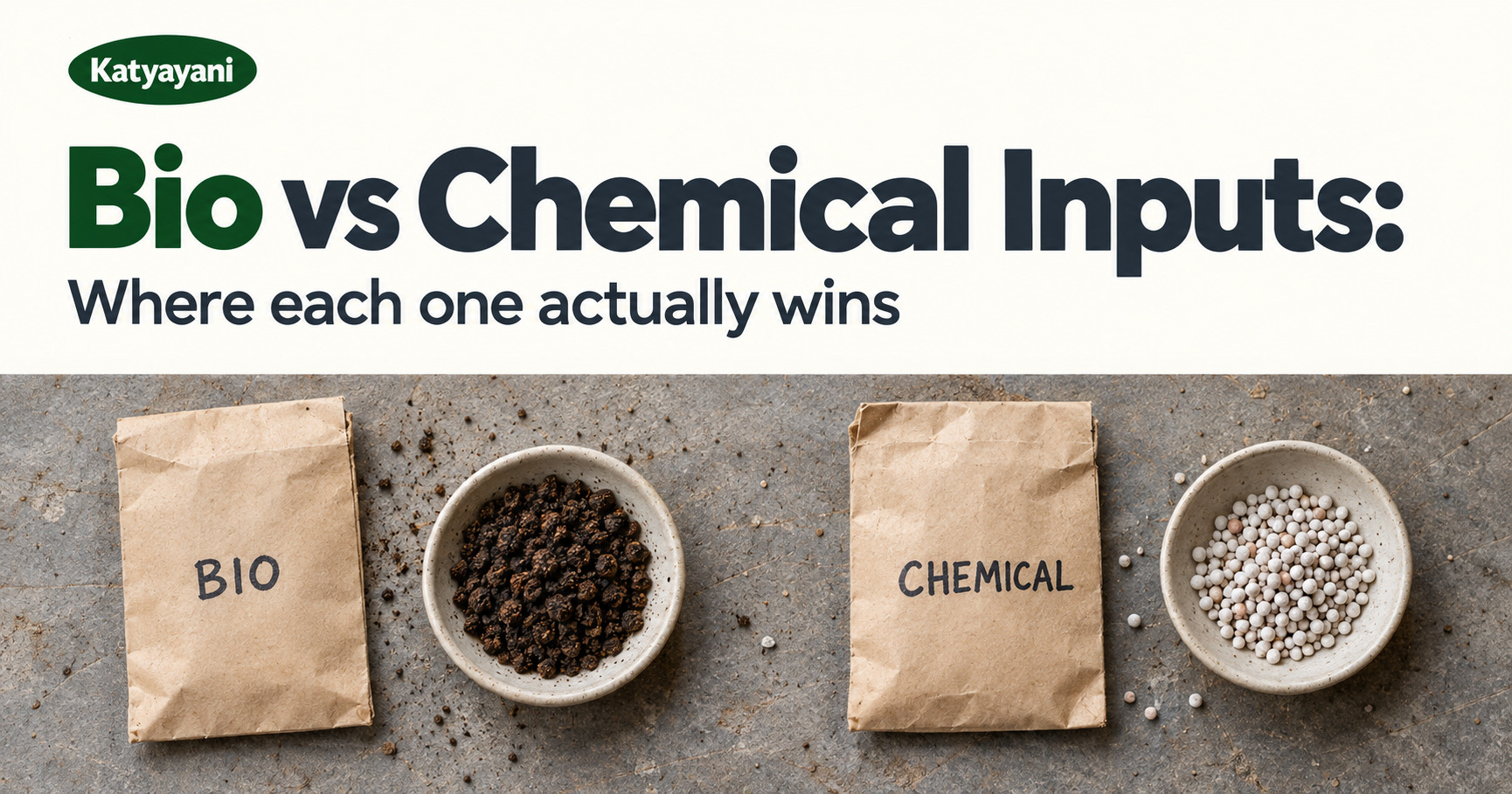
Bio vs chemical inputs: where each one actually wins
Chemical inputs stop an outbreak that is already underway. Biologicals prevent one from starting, protect the soil, and keep produce free of residue. They are not competitors. Used in the wrong order, both disappoint.
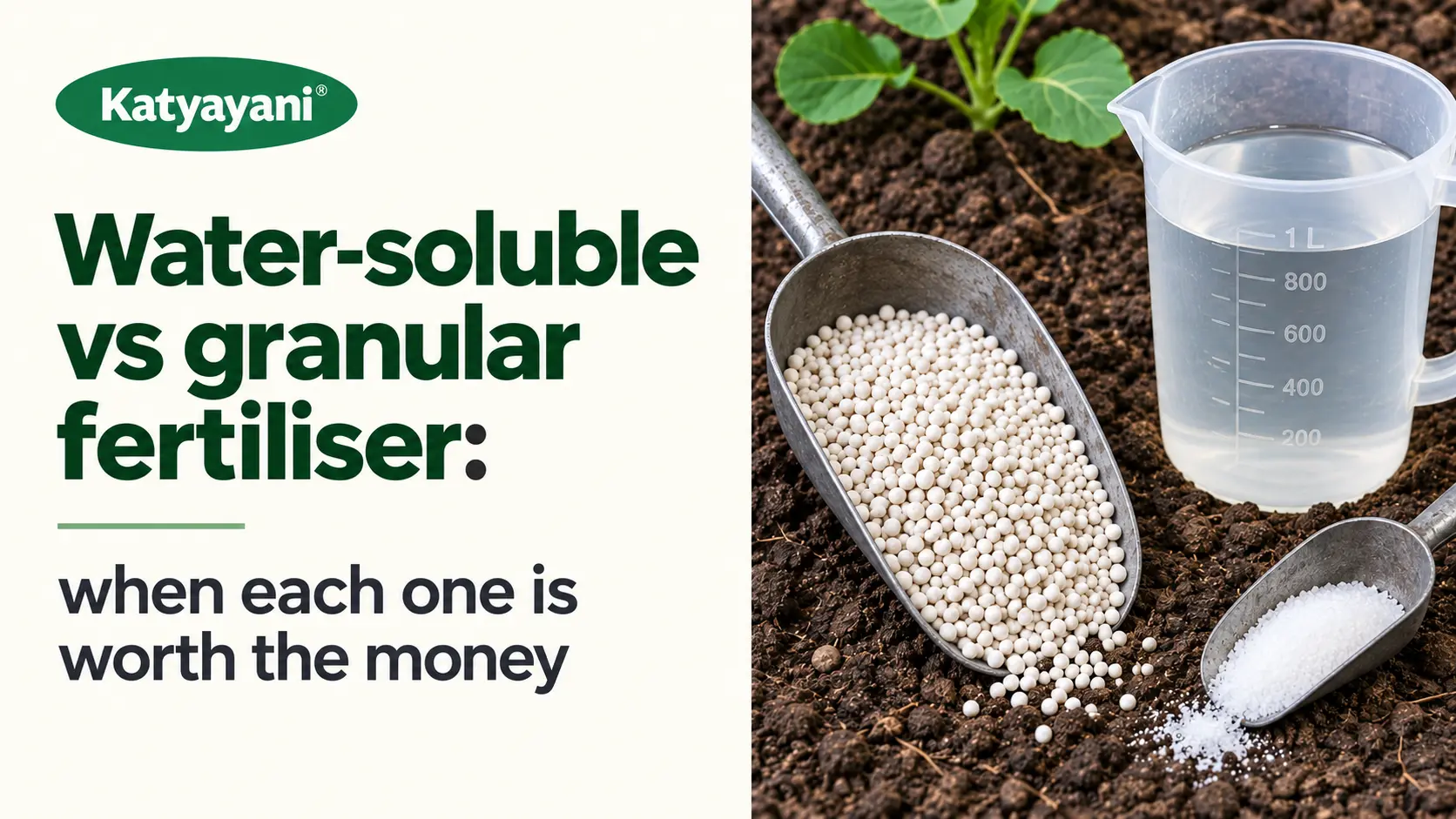
Water-soluble vs granular fertiliser: when each one is worth the money
Water-soluble fertiliser costs two to four times more per kilogram than granular. It is worth that premium only when the crop needs a nutrient fast, or when you are already running drip. For the base dose at sowing, granular still wins on cost.

FPO Credit Guarantee Scheme Explained
A credit guarantee does not give your FPO money. It gives your bank a safety net, so the bank can lend to your FPO without asking for land or building as security. Under the 10,000 FPO scheme, an FPO can get a project loan of up to Rs 2 crore covered by a guarantee. Loans up to Rs 1 crore get 85 per
