 6 min read
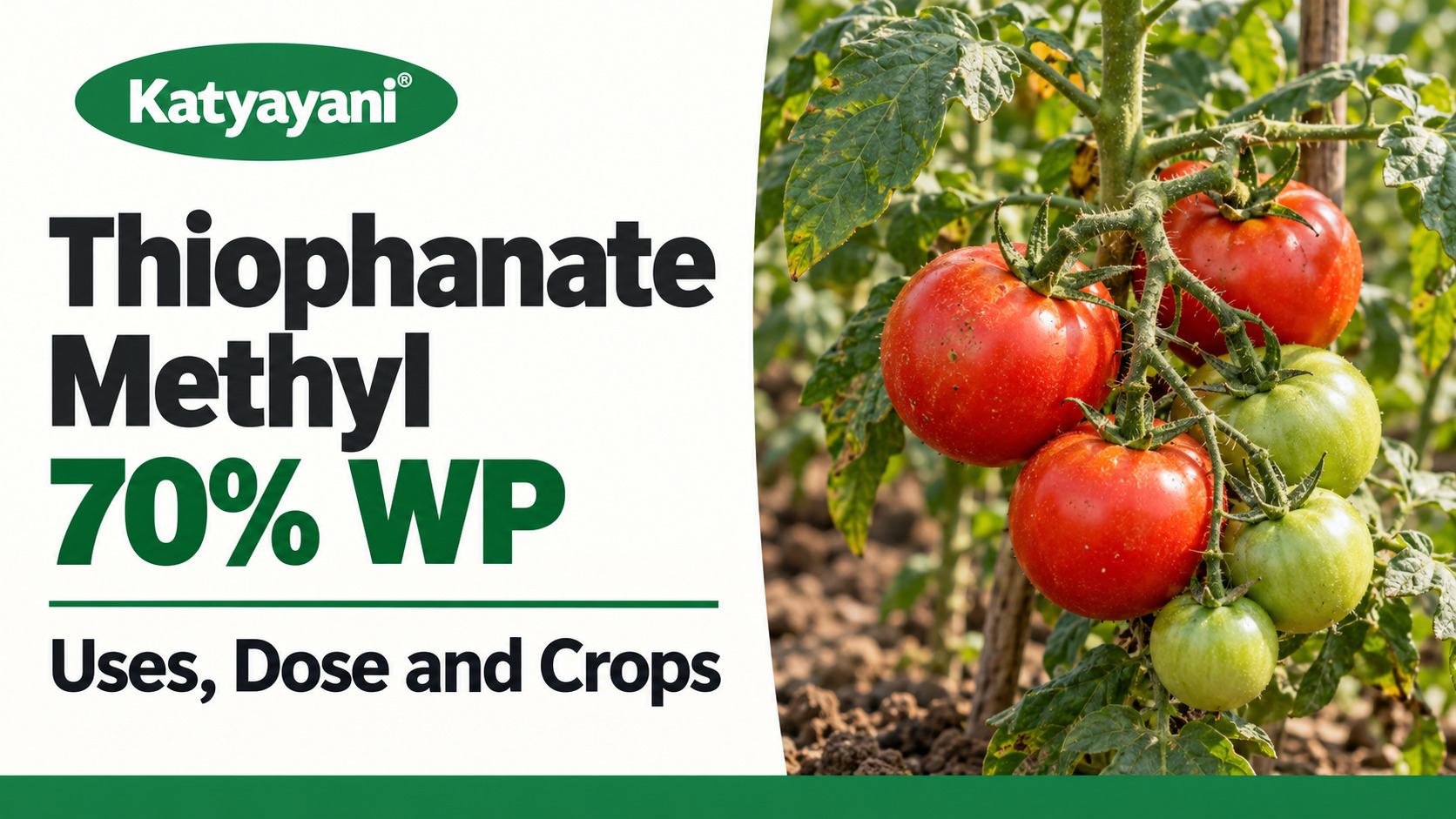
Thiophanate methyl 70% WP is a systemic fungicide. It controls powdery mildew, scab, rust, anthracnose and wilt. Foliar dose is about 250-600 g per acre. Always follow your product label.
What is thiophanate methyl 70% WP?
Thiophanate methyl is a systemic fungicide from the benzimidazole group. "70% WP" means the pack has 70% active ingredient in a wettable powder that you mix in water. Inside the plant it turns into carbendazim, the part that actually stops the fungus. That is why it works from inside the leaf and can stop early infection, not just protect the surface.
Katyayani's KTM Thiophanate Methyl 70% WP is one such product, sold in sizes from 250 g to 3 kg.
How does thiophanate methyl work?
- It moves inside the plant after spraying (systemic action).
- It blocks cell division in the fungus, so the disease cannot spread further.
- It works both as a protector and, at early stage, as a curative.
- It does not work on downy mildew or Phytophthora, because those are oomycetes, not true fungi.
Which diseases and crops does thiophanate methyl control?
| Disease | Crops commonly listed |
|---|---|
| Powdery mildew | Papaya, grapes, cucurbits, tomato, wheat |
| Scab | Apple, pear |
| Rust and leaf blight | Wheat |
| Fusarium wilt | Pigeon pea, tomato, vegetables (nursery) |
| Anthracnose | Chilli, mango, papaya |
| Cercospora leaf spot | Groundnut, tomato |
| Early blight, ring rot | Tomato, potato, apple |
Crop and disease claims differ by brand label. Use the crops printed on the pack you buy.
What is the thiophanate methyl dosage per acre?
| Use | Reported dose | Source type |
|---|---|---|
| Foliar spray | 250-600 g per acre, depending on disease | Indian product listings |
| Foliar spray (manufacturer) | 286-572 g per acre | Albaugh India label listing |
| Foliar spray (per litre) | About 1 g per litre of water | Farmkart guide |
| Seed treatment | 2-3 g per kg of seed | Farmkart guide; confirm on label |
| Nursery soil drench | 2-4 g per litre of water | Farmkart guide; confirm on label |
Use 150-200 litres of water per acre for field crops. Doses vary by brand, crop and country, so the label on your pack always overrules this table.
How and when to spray thiophanate methyl?
- Spray at the first sign of disease or before the disease season. Late spraying works less.
- Repeat after 10-14 days only if disease pressure stays high.
- Spray in the evening or early morning. Do not spray in rain.
- Wear gloves and a mask. Keep children and animals away.
- Check the pre-harvest interval on your label before picking vegetables or fruit.
How to stop the fungus becoming resistant?
Benzimidazole fungicides have shown resistance in some fungi after years of repeated use. Do not use thiophanate methyl or carbendazim every spray. Rotate with a different group, for example a contact fungicide like Katyayani K-Zeb Mancozeb 75% WP or a triazole like Katyayani Hexaconazole 5% SC. Do not mix it with another thiophanate or thiabendazole product.
Thiophanate methyl vs carbendazim: what is the difference?
| Point | Thiophanate methyl | Carbendazim |
|---|---|---|
| Type | Pro-fungicide: converts to carbendazim in the plant | Active form directly |
| Action | Systemic, protective and early curative | Systemic, protective and curative |
| Use | Foliar, seed, drench | Foliar, seed, drench |
| Katyayani option | KTM Thiophanate Methyl 70% WP | Superstin Carbendazim 50% WP |
Where does thiophanate methyl fit in a disease plan?
Use it as one part of a plan: clean seed, seed treatment, a nursery drench, then timed sprays. If you also treat seed with Rhizobium or PSB, read our biofertilizer guide for chana and other rabi pulses so the order of seed treatments is right. Dealers building a fungicide range can see how it works in agri-input franchise in India.
Conclusion
Thiophanate methyl 70% WP is a flexible systemic fungicide for foliar spray, seed treatment and nursery drench. Use it early, keep to the label dose, and rotate with another fungicide group so it keeps working on your farm.
Why trust this guide
Written by Team Katyayani, Editorial Team at Katyayani Organics. Cross-checked against published research and university extension programs.

Leave a Comment