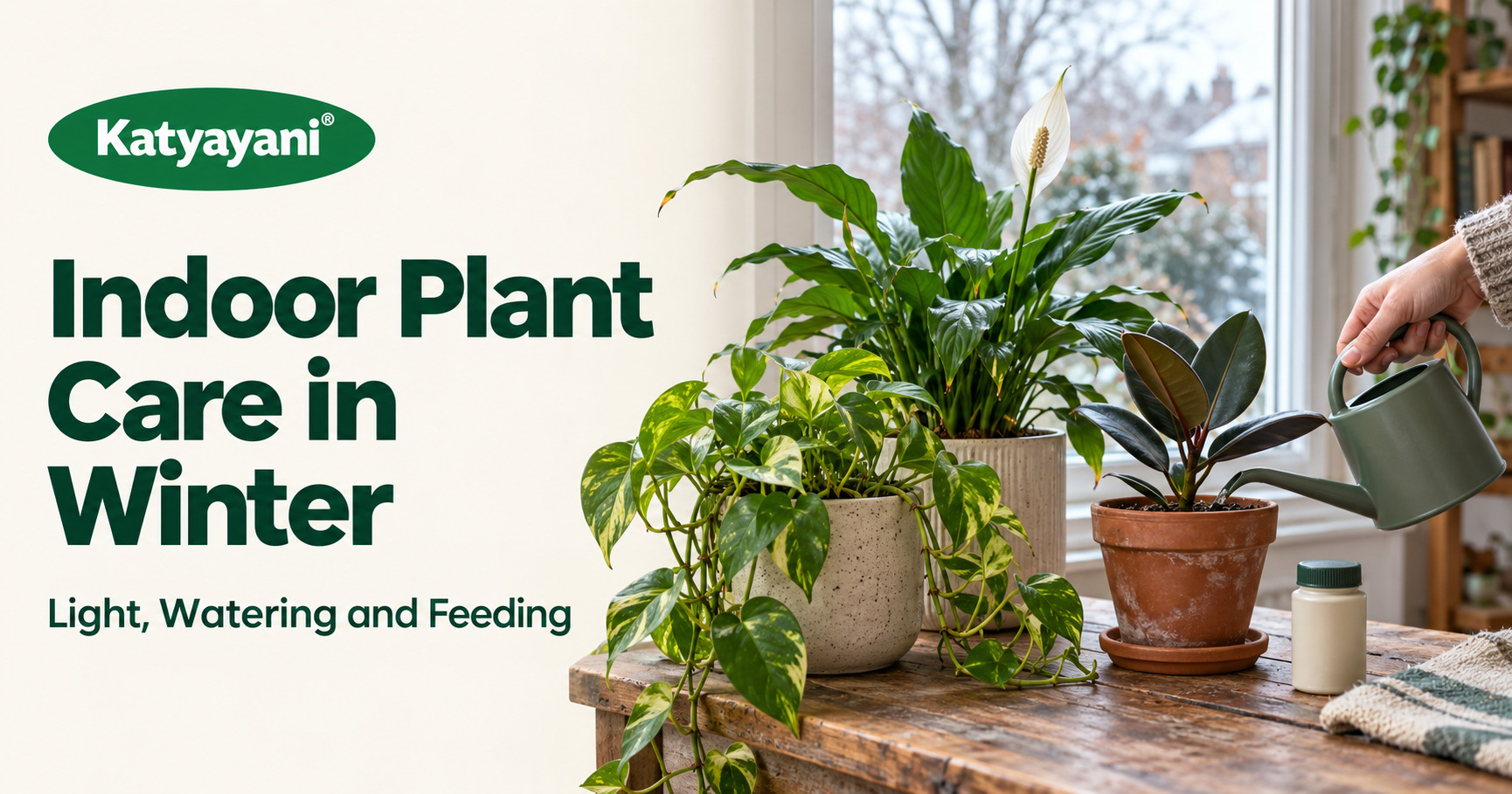
 5 min read
Quick answer: In winter, move indoor plants to the brightest window, water only when the top 2 to 5 cm of soil is dry, and stop or halve feeding until spring. Keep them between about 15 and 24°C (60 to 75°F), away from heaters and cold glass, and raise humidity with trays or grouping. Check for spider mites and fungus gnats weekly.
Key Takeaways
- Winter light is weaker and shorter, so most houseplants slow down; move them closer to windows or add a grow light for 12 to 14 hours.
- Overwatering is the top winter killer; check soil with a finger or chopstick before every watering.
- Most plants need no fertilizer from late autumn to late winter; flowering plants, plants under grow lights and plants in warm south Indian homes are exceptions.
- Heated or heater-dried rooms can drop to 10 to 20 percent humidity, while most tropical houseplants prefer around 50 percent.
- Spider mites like dry air and fungus gnats like wet soil, so both rise in winter.
Why do indoor plants struggle in winter?
Indoor plants struggle in winter because days are shorter, sunlight is weaker, and indoor air is often dry or cold near windows. Most houseplants respond by slowing growth, and care that suited summer, especially watering and feeding, becomes too much.
University of Vermont Extension, in its note on houseplant care during the winter months, explains that lower light pushes most plants into a resting state, so they need far less water and generally no fertilizer until spring.
Winter in India vs colder countries
Conditions differ a lot by location. In north India, homes are rarely centrally heated, rooms can fall to 8 to 12°C at night in December and January, and fog can cut light for days. In south India and coastal cities, winter is mild and many plants barely slow down. In the US, UK and Europe, central heating keeps rooms warm but very dry, and daylight in December can be as short as 8 hours or less.
| Where you live | Main winter challenge | Main adjustment |
|---|---|---|
| North and central India | Cold nights, fog, cold windowsills | Move plants off cold glass at night, water less, pause feeding |
| South India and coastal cities | Slightly lower light, otherwise mild | Water a little less, feed at half strength monthly |
| US, UK, Europe (heated homes) | Short days, low humidity, heater drafts | Add light, raise humidity, keep away from radiators |
How much light do indoor plants need in winter?
Indoor plants need as much light as you can give them in winter, because both the hours and strength of sunlight drop. Move them to the brightest window you have and clean the leaves so they absorb more light.
In the northern hemisphere, south and west-facing windows get the most winter sun, and east windows get gentle morning sun. North windows are usually too dim for anything except low-light plants in winter. In the southern hemisphere, north-facing windows are the brighter ones.
- Move high-light plants such as succulents, crotons and fiddle leaf figs right next to the sunniest window.
- Move medium-light plants such as money plant (pothos), monstera and rubber plant within 1 to 2 metres of a bright window.
- Rotate pots a quarter turn every week so plants do not lean.
- Wipe dust off leaves with a damp cloth every few weeks.
- Keep leaves from touching cold window glass, which can scorch them on frosty nights.
Do you need a grow light?
A grow light helps if your plants are more than 2 metres from a window, face north, or live in a country with very short winter days. An LED grow light running 12 to 14 hours a day on a timer, placed about 15 to 30 cm (6 to 12 inches) above the plants, is enough for most houseplants and herbs. Check the manufacturer's recommended distance for your specific light.
How often should you water indoor plants in winter?
Water indoor plants in winter only when the soil has dried to the right depth for that plant, which usually means watering half as often as in summer or less. Never water on a fixed day of the week without checking the soil first.
- Push a finger or a wooden chopstick 3 to 5 cm (1 to 2 inches) into the soil.
- If it comes out dry and clean, water; if it is damp or has soil sticking to it, wait and check again in 2 to 3 days.
- Use water at room temperature, not straight from a cold tap or fridge.
- Water slowly until it drains from the bottom, so the whole root ball is moistened.
- Empty the saucer within 15 to 20 minutes; roots sitting in cold water rot quickly.
- Water in the morning so the soil surface can dry during the day.
| Plant | Winter watering (typical) | Notes |
|---|---|---|
| Snake plant (Sansevieria) | Every 3 to 5 weeks | Let soil dry fully; very prone to rot in winter |
| ZZ plant | Every 3 to 4 weeks | Stores water in rhizomes |
| Cacti and succulents, jade | Every 3 to 6 weeks, or not at all in cold rooms | Keep bright and dry |
| Money plant (pothos) | Every 10 to 14 days | Water when top 3 to 5 cm is dry |
| Monstera, rubber plant | Every 10 to 14 days | Yellow lower leaves often mean overwatering |
| Spider plant | Every 7 to 10 days | Brown tips in dry air are common |
| Peace lily | Every 7 to 10 days | Droops when thirsty and recovers after watering |
| Fern (Boston fern) | Keep lightly moist | Needs humidity more than extra water |
| African violet | When top is just dry, from below | Use lukewarm water, keep leaves dry |
These intervals are only a guide for a room at about 15 to 22°C. Colder rooms, bigger pots and plastic pots need even less frequent watering; small clay pots near a heater dry faster.
Should you fertilize indoor plants in winter?
Most indoor plants should not be fertilized in winter, because they are resting and cannot use the nutrients. Unused fertilizer builds up as salts in the pot and can burn roots.
There are some exceptions. Plants that are actively flowering in winter, such as African violets and some orchids, plants growing under grow lights, and plants in warm south Indian homes that keep putting out new leaves can be fed at half strength about once a month.
- Northern hemisphere and north India: stop feeding from about November and restart in late February or March when new growth appears.
- South India and tropical climates: feed at half strength monthly if the plant is still growing.
- Under grow lights: continue a light feed every 4 to 6 weeks.
- Restarting in spring: a diluted seaweed extract liquid fertilizer at the label dose is a gentle first feed after the winter break.
- For a slow-release boost in spring, mix a small amount of enriched vermicompost into the top layer of soil.
If you see a white crust on the soil surface or pot rim, flush the pot with plain water two or three times, letting it drain fully each time, before you begin feeding again.
How to manage humidity and temperature indoors
Most tropical houseplants prefer around 50 percent humidity, but heated rooms in winter can drop to 10 to 20 percent. Room heaters and blowers used in Indian homes also dry the air near them.
For temperature, most common houseplants are comfortable at about 18 to 24°C (65 to 75°F) by day and not below 13°C (55°F) at night. Many will survive brief dips to 10°C, but tropical plants such as calatheas, crotons and aglaonemas can get leaf damage below that.
- Group plants together so they share the moisture they give off.
- Place pots on a tray of pebbles with water below the pot base, not touching it.
- Run a room humidifier near humidity-loving plants such as ferns and calatheas.
- Keep plants at least 1 metre away from heaters, radiators, blowers and air conditioner vents.
- Move plants away from windows and doors that let in cold drafts at night.
- Misting gives only a few minutes of extra humidity and is not a replacement for trays or a humidifier.
Common winter pests and problems on indoor plants
Spider mites and fungus gnats are the two most common winter pests indoors. Mites thrive in dry, warm air, and gnats breed in soil that stays wet.
| Problem | How to spot it | What to do |
|---|---|---|
| Spider mites | Fine webbing, tiny speckles, dull or bronzed leaves | Rinse leaves, raise humidity, spray neem oil weekly |
| Fungus gnats | Small black flies around the soil | Let top soil dry out, use yellow sticky traps |
| Mealybugs | White cottony clusters in leaf joints | Dab with cotton dipped in rubbing alcohol, then spray neem oil |
| Scale | Brown bumps on stems and leaf undersides | Scrape off gently and treat with neem oil |
| Yellow lower leaves | Soft yellow leaves, wet soil | Water less and check drainage |
| Leaf drop | Sudden drop after moving or cold draft | Keep in a stable warm spot; it usually recovers |
| Brown crispy tips | Dry edges on otherwise healthy plant | Raise humidity, avoid heater drafts |
For home use, an activated neem oil spray mixed at the label rate works against mites, mealybugs and aphids. Test on one leaf first, spray away from direct sun, cover leaf undersides and repeat every 7 days. Follow the product label and local agriculture officer or extension advice for any stronger product.
Which indoor plants cope with winter most easily?
Snake plant, ZZ plant, money plant (pothos), spider plant, aglaonema and cast-iron plant cope with winter most easily, because they tolerate low light and a few missed waterings. Ferns, calatheas, crotons and fiddle leaf figs are fussier and need steady warmth, light and humidity.
If you are buying new plants in December, pick from the easy group. Plants moved from a warm, humid nursery to a dry, dim room often drop a few leaves in the first weeks. Give them a bright spot, water lightly, and do not repot or feed until they settle.
Some plants are meant to rest. Many cacti and succulents flower better in spring after a cool, dry winter rest. Do not mistake this slow phase for a problem.
Winter indoor plant care checklist
A short weekly routine is enough to keep indoor plants healthy through winter. It takes about 10 to 15 minutes for a dozen plants.
- Check soil moisture of every pot before watering anything.
- Rotate each pot a quarter turn.
- Look under a few leaves on each plant for mites, mealybugs or webbing.
- Remove yellow or dead leaves and fallen debris from the soil.
- Refill pebble trays and check the humidifier if you use one.
- Once a month, wipe leaves and check that nothing is touching cold glass or sitting near a heater.
Avoid repotting in winter unless roots are rotting or the pot has broken. Plants recover faster from repotting when growth picks up in spring.
What to do next
This week, walk around your home at midday and note which windows get the most light. Move your light-loving plants there, and set a reminder to check soil before watering instead of watering on a schedule.
Mark late February or early March in your calendar to restart feeding and plan any repotting. Plants that are kept dry, bright and pest-free through winter usually push out strong new growth in spring.
Why trust this guide
Written by Team Katyayani, Editorial Team at Katyayani Organics. Cross-checked against published research and university extension programs.

Leave a Comment