 5 min read
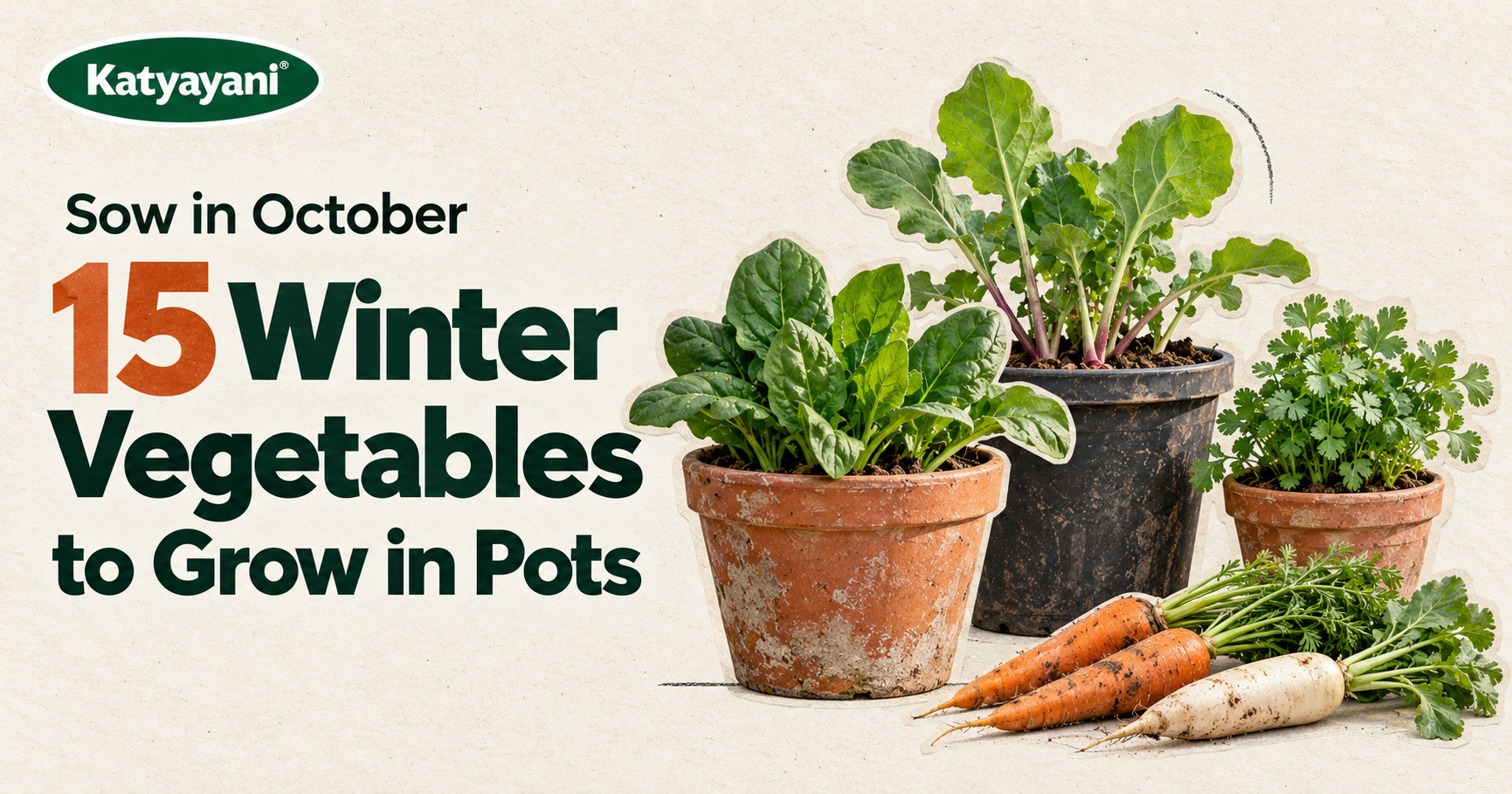
Quick answer: In the Indian plains, October is the month to sow spinach, methi, coriander, radish, carrot, beetroot, turnip, mustard greens, lettuce, peas and spring onion directly in pots, and to raise cauliflower, cabbage, broccoli and knol-khol seedlings. Use 6 to 8 inch pots for greens, 12 inch pots for roots, and 12 to 14 inch pots for cabbage-family crops.
Key Takeaways
- October sowing works for most of north and central India once day temperatures fall below about 32°C; south India can keep sowing until January.
- Match pot depth to the crop: greens need 6 to 8 inches, carrots and beetroot need 10 to 12 inches, cabbage-family plants need a 12 to 14 inch pot each.
- Leafy greens like methi, spinach and radish give a first harvest in 25 to 45 days, so sow small batches every two weeks.
- A light, draining mix of soil, cocopeat and compost or vermicompost, plus a monthly top-up, keeps pot crops fed through winter.
- Aphids and powdery mildew are the main winter problems in pots; check leaf undersides weekly and act early.
Why October is the right month to sow winter vegetables in pots
October is the main sowing month for cool-season (rabi) vegetables across the Indian plains because nights start cooling and the monsoon humidity drops. Seeds of leafy greens and root crops germinate well at 15 to 25°C, and that is the range most of north and central India reaches by mid-October.
In Delhi, Punjab, Haryana, Uttar Pradesh, Madhya Pradesh, Rajasthan and Bihar, sow from the first week of October to mid-November. In Maharashtra, Gujarat and the Deccan, you can start in October and continue till December. In Tamil Nadu, Karnataka and Kerala, where winters are mild, most of these crops also grow from October to January, though carrots and cauliflower do better in hill stations or in cooler inland towns.
If day temperatures in your city are still above 32 to 34°C, wait a week or two for spinach, lettuce and peas. These crops bolt or germinate poorly in heat. Radish, methi and mustard greens are more forgiving and can go in first.
What pot size do winter vegetables need?
Pot depth matters more than width for most winter crops. Leafy greens need a shallow 6 to 8 inch pot, root vegetables need depth equal to their root length plus a few inches, and cabbage-family plants need a 12 to 14 inch pot for a single plant.
Grow bags work just as well as clay or plastic pots and are cheaper for a balcony. A 12 x 12 inch grow bag holds roughly 20 to 25 litres of mix. Whatever you use, make sure there are at least 3 to 4 drainage holes, because winter watering is slower to dry out and waterlogged roots rot quickly.
- 6 to 8 inch deep pots or troughs: spinach, methi, coriander, lettuce, mustard greens, spring onion.
- 8 to 10 inch deep: round radish, turnip, knol-khol, peas (with support).
- 10 to 12 inch deep: long radish, carrot, beetroot.
- 12 to 14 inch pot or 15 to 20 litre grow bag, one plant each: cauliflower, cabbage, broccoli.
15 winter vegetables for pots: pot size and days to harvest
The table below lists 15 winter vegetables that grow reliably in pots in the Indian plains. Days to harvest are counted from sowing for direct-sown crops and are typical ranges; actual time depends on variety, sunlight and how cold your winter gets.
| Vegetable (Hindi name) | How to sow | Pot depth | Seed depth / spacing | Days to first harvest |
|---|---|---|---|---|
| Spinach (palak) | Direct | 6 to 8 in | 1 cm deep, 5 cm apart | 30 to 40 (cut-and-come-again) |
| Fenugreek (methi) | Direct, broadcast | 6 in | 0.5 cm deep, dense | 25 to 30 for leaves |
| Coriander (dhania) | Direct, split seeds | 6 to 8 in | 1 cm deep, dense | 30 to 40 for leaves |
| Radish (mooli) | Direct | 8 to 12 in | 1 cm deep, 5 to 8 cm apart | 25 to 30 (red), 40 to 50 (white) |
| Carrot (gajar) | Direct | 12 in | 0.5 cm deep, thin to 5 cm | 75 to 100 |
| Beetroot (chukandar) | Direct | 10 to 12 in | 1 to 1.5 cm deep, 8 cm apart | 55 to 70 |
| Turnip (shalgam) | Direct | 10 in | 1 cm deep, 10 cm apart | 45 to 60 |
| Mustard greens (sarson saag) | Direct | 8 in | Surface to 0.5 cm, thin to 10 cm | 30 to 40 for leaves |
| Lettuce (salad patta) | Direct or transplant | 6 to 8 in | Surface sow, 15 to 20 cm apart | 40 to 60 |
| Peas (matar) | Direct | 10 in, with support | 2 to 3 cm deep, 5 to 8 cm apart | 60 to 90 |
| Spring onion (hara pyaz) | Direct or sets | 6 to 8 in | 1 cm deep, 3 cm apart | 50 to 70 from seed, 25 to 30 from sets |
| Knol-khol (ganth gobhi) | Transplant | 10 in | One or two per pot | 50 to 65 after transplant |
| Cauliflower (phool gobhi) | Transplant | 12 to 14 in | One per pot | 60 to 90 after transplant (mid and late types) |
| Cabbage (patta gobhi) | Transplant | 12 to 14 in | One per pot | 70 to 90 after transplant |
| Broccoli | Transplant | 12 to 14 in | One per pot | 60 to 80 after transplant, then side shoots |
For a steady supply, sow a small patch of methi, radish or spinach every 15 days from October to December instead of one big sowing. A family of four gets a regular handful of greens from about four to six 12 inch troughs sown in rotation.
Which winter vegetables are easiest for beginners?
Methi, radish, spinach, mustard greens and coriander are the easiest winter vegetables for pots. They germinate in 3 to 7 days, need little care, and give a harvest within 30 to 45 days, so a beginner sees results before losing interest.
Leafy greens
Spinach and methi can be cut 2 to 3 times if you snip leaves 3 to 4 cm above the soil. Soak coriander seeds for 8 to 12 hours after gently splitting them; germination improves noticeably. Mustard greens grow fast in cool weather and handle light shade better than most crops.
Root vegetables
Radish is the quickest root crop, and small red globe types suit shallow pots. Carrot and beetroot need loose, stone-free mix; any lumps or hard layers give forked or stunted roots. Thin seedlings early, when they are 3 to 5 cm tall, because crowded roots stay small.
Cabbage family
Cauliflower, cabbage, broccoli and knol-khol need more space and more feeding, but one well-grown head from a pot feels rewarding. Buy healthy 4 to 5 week old seedlings from a nursery if you do not want to raise them, and plant only one per 12 to 14 inch pot.
What potting mix should you use for winter vegetables?
A good potting mix for winter vegetables is light, drains fast and holds nutrients. A simple and widely used ratio is 40 percent garden soil, 30 percent cocopeat and 30 percent compost or vermicompost.
The Tamil Nadu Agricultural University (TNAU) rooftop gardening FAQ recommends a similar approach: soil, sand or coir pith, and compost or vermicompost in roughly equal parts. Add a handful of neem cake per pot if you have had root pests before. Avoid pure garden soil, which compacts in pots and stays cold and wet in winter.
- Sieve garden soil to remove stones and clods, especially for carrot and beetroot.
- Wash and soak cocopeat block, squeeze out extra water, and let it drain for a day.
- Mix soil, cocopeat and well-matured enriched vermicompost in a 4:3:3 ratio.
- Add 1 to 2 tablespoons of neem cake per 10 litres of mix (optional).
- Fill pots to 2 to 3 cm below the rim, water well, and let the mix settle for a day before sowing.
- Mix a small quantity of a Trichoderma-based bio-fungicide into the mix if damping off has troubled you in the past, following the pack directions.
For the Trichoderma step, a Trichoderma viride bio-fungicide is an easy option for home gardeners; follow the product label for quantity.
How to sow and care for winter vegetables in pots
Sow seeds at a depth of about two to three times their size, keep the mix evenly moist until germination, and give the pots at least 5 to 6 hours of direct sun. Most sowing mistakes come from sowing too deep or keeping pots in shade.
Sunlight
Winter sun is weaker and days are shorter, so place pots on the sunniest side of your terrace or balcony. South and east-facing spots are usually brighter in winter in the northern hemisphere. Leafy greens manage with 4 to 5 hours, but cauliflower, cabbage, peas and carrot need 6 hours or more for good heads and roots.
Watering
Water when the top 2 to 3 cm of mix feels dry. In October this may mean daily watering; by December, every 2 to 3 days is usually enough. Water in the morning so leaves dry before evening, which reduces fungal disease.
Thinning and support
Thin direct-sown crops once they have 2 to 3 true leaves, and use the thinnings in salads or dal. Give peas a 3 to 4 foot trellis, string net or bamboo sticks at sowing time so the tendrils have something to climb.
How to feed vegetables growing in pots
Pot vegetables need regular light feeding because nutrients wash out with each watering. A handful of compost or vermicompost every 3 to 4 weeks plus a liquid feed every 10 to 15 days covers the needs of most winter crops.
TNAU's kitchen garden guidance advises applying decomposed kitchen waste to all crops and small doses of complex fertilizer at 30, 60 and 90 days after planting. For an organic pot garden, you can follow the same timing with compost instead.
- At sowing: compost or vermicompost already mixed into the potting mix.
- From 15 to 20 days after germination: a diluted seaweed extract liquid fertilizer spray or drench every 10 to 15 days, at the label dose.
- Every 3 to 4 weeks: top-dress 1 to 2 handfuls of vermicompost per 12 inch pot and scratch it in lightly.
- Cabbage family: a little extra nitrogen after 3 weeks from transplant, through compost tea or a cake-based fertilizer.
- Peas: go easy on nitrogen; too much gives leaves instead of pods.
Yellowing of older leaves usually means nitrogen is running low. Purple tints on cabbage or cauliflower leaves in cold weather are often a phosphorus uptake issue in cold soil, and they often fade as days warm up.
Common pests and problems in winter pot vegetables
Aphids, cabbage caterpillars and powdery mildew are the most common problems in winter pot vegetables. Weekly checks of leaf undersides catch most of them before they spread.
- Aphids on mustard, cabbage, peas and coriander: wash off with a strong water jet, then spray a neem oil solution every 7 days till they are gone.
- Diamondback moth and cabbage caterpillars on cauliflower and cabbage: hand-pick larvae and spray neem oil early, when damage is first seen.
- Powdery mildew on peas: space plants, water only at the base, and remove badly affected leaves.
- Damping off in seedlings: avoid overwatering and use a clean mix; Trichoderma in the mix helps.
- Leaf miners on peas and methi: remove affected leaves, which show winding white trails.
For home gardens, an activated neem oil spray mixed at the label rate is a practical first line of defence against soft-bodied pests. Spray in the evening, cover leaf undersides, and follow the product label and local agriculture officer advice for any stronger product.
In north India, a few nights in late December and January may drop to 2 to 5°C. Move pots close to a wall, cover them with an old cotton sheet at night, or shift them under a shade on frosty nights. Peas, spinach and cabbage tolerate cold well; lettuce and young seedlings need more care.
How and when to harvest winter vegetables from pots
Harvest leafy greens young and often, and pull root crops as soon as they reach usable size. Pot-grown roots left too long turn woody or crack.
- Radish: pull red types at 25 to 30 days; white types before 50 days to avoid pithiness.
- Carrot: check by brushing soil from the top; harvest when the shoulder is about 2 cm wide.
- Cauliflower: cut when the curd is compact and white, before it loosens or turns yellow. Tie outer leaves over the curd to keep it white.
- Broccoli: cut the main head while buds are still tight and green; side shoots follow for 3 to 4 weeks.
- Peas: pick every 2 to 3 days once pods fill, which keeps the plant producing.
Once a pot is empty, top it up with fresh compost and resow a quick crop such as methi or coriander. This way a small balcony keeps producing from October till February.
What to do next
Pick five crops from the table that your family eats most, and get the pots and mix ready this week. Start with methi, radish and spinach for quick wins, then add a few cauliflower or cabbage seedlings in the second half of October.
Keep a simple note of sowing dates on a pot label or in your phone. When you know which crop gave a harvest in how many days on your own balcony, next October's planning becomes much easier.
Why trust this guide
Written by Team Katyayani, Editorial Team at Katyayani Organics. Cross-checked against published research and university extension programs.

Leave a Comment