Home Gardening
Tips and guides for growing plants at home, in pots, containers and terrace gardens
12 articles
 5 min
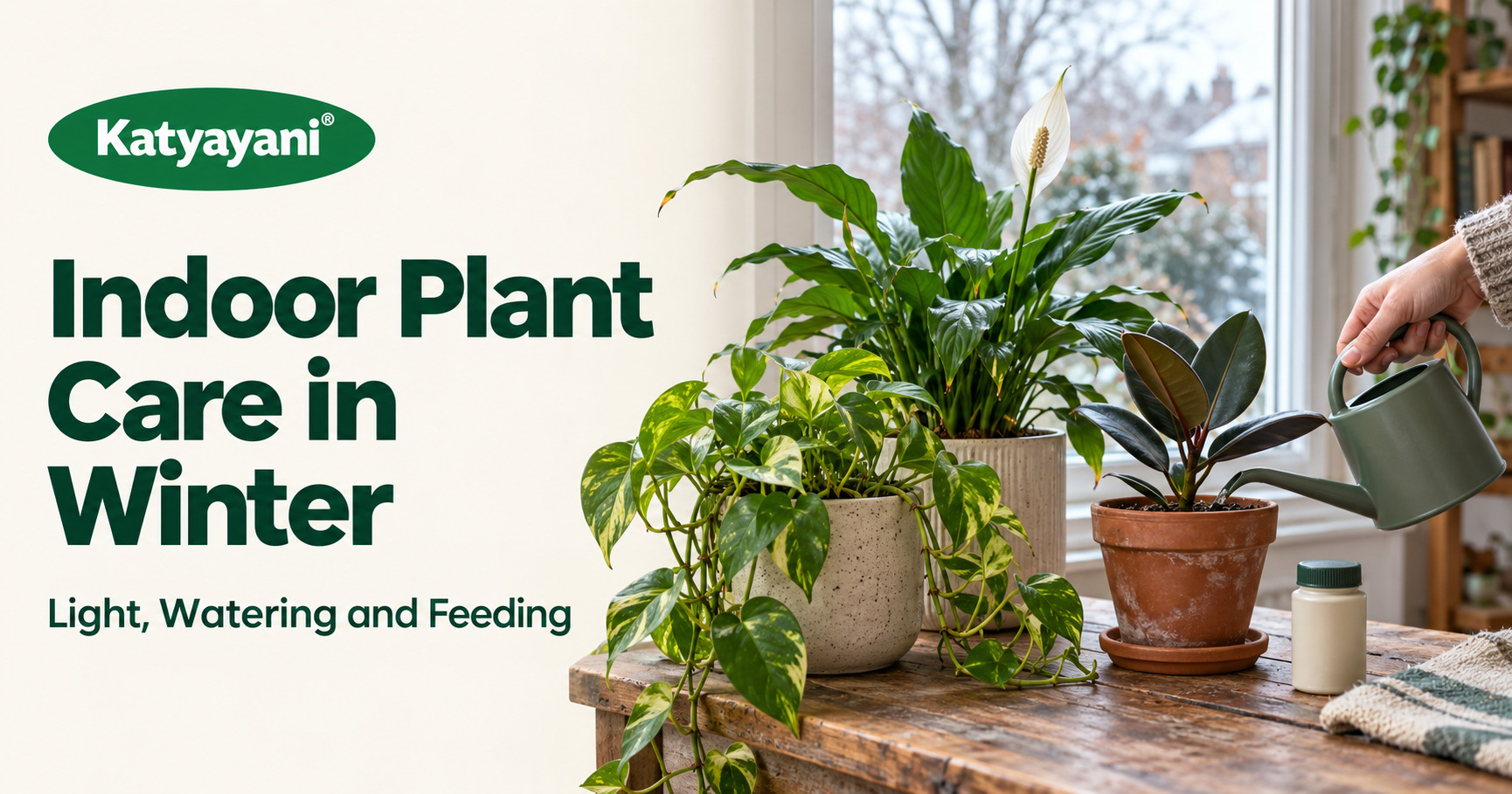
5 minIndoor Plant Care in Winter: Light, Watering and Feeding
In winter, move indoor plants to the brightest window, water only when the top 2 to 5 cm of soil is dry, and stop or halve feeding until spring. Keep them between about 15 and 24°C (60 to 75°F), away from heaters and cold glass, and raise humidity with trays or grouping. Check for spider mites and fungus gnats weekly.
 5 min
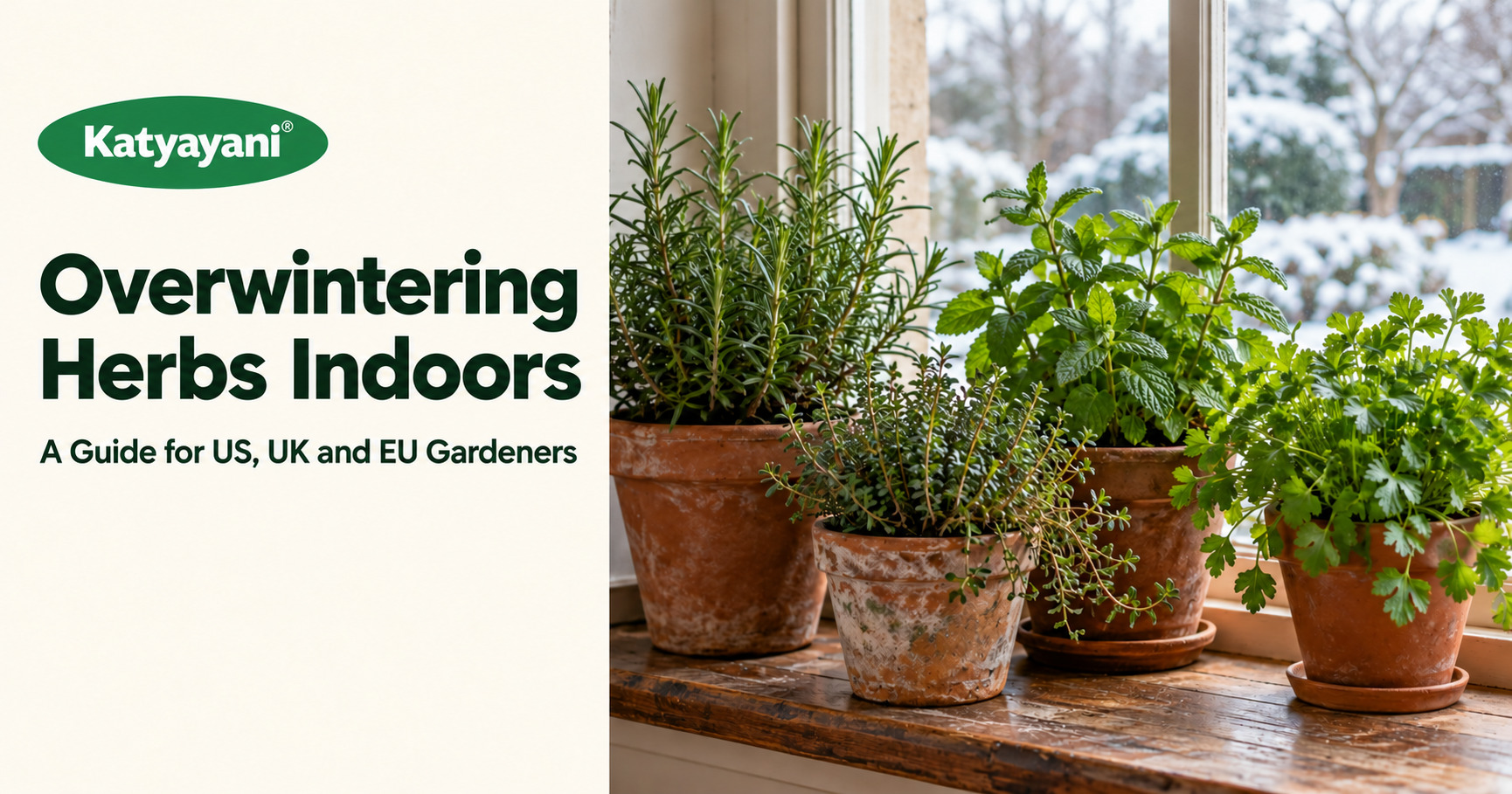
5 minOverwintering Herbs Indoors: A Guide for US, UK and EU Gardeners
Bring tender herbs such as rosemary, bay, lemon verbena and basil indoors before nights fall below about 45 to 50°F (7 to 10°C). Pot them in free-draining mix, give a south-facing window or 12 to 14 hours of grow light, keep them at 50 to 65°F (10 to 18°C), and water only when the top inch is dry.
 5 min
5 minWinter Kitchen Garden Feeding Schedule (Compost + Liquid Feed)
A simple winter kitchen garden fertilizer schedule is: mix 25 to 30 percent compost or vermicompost into the potting mix at sowing, top-dress 100 to 150 g vermicompost per 12 inch pot every 3 to 4 weeks, and give a diluted liquid feed such as seaweed extract every 10 to 15 days. Feed less in December and January.
 5 min
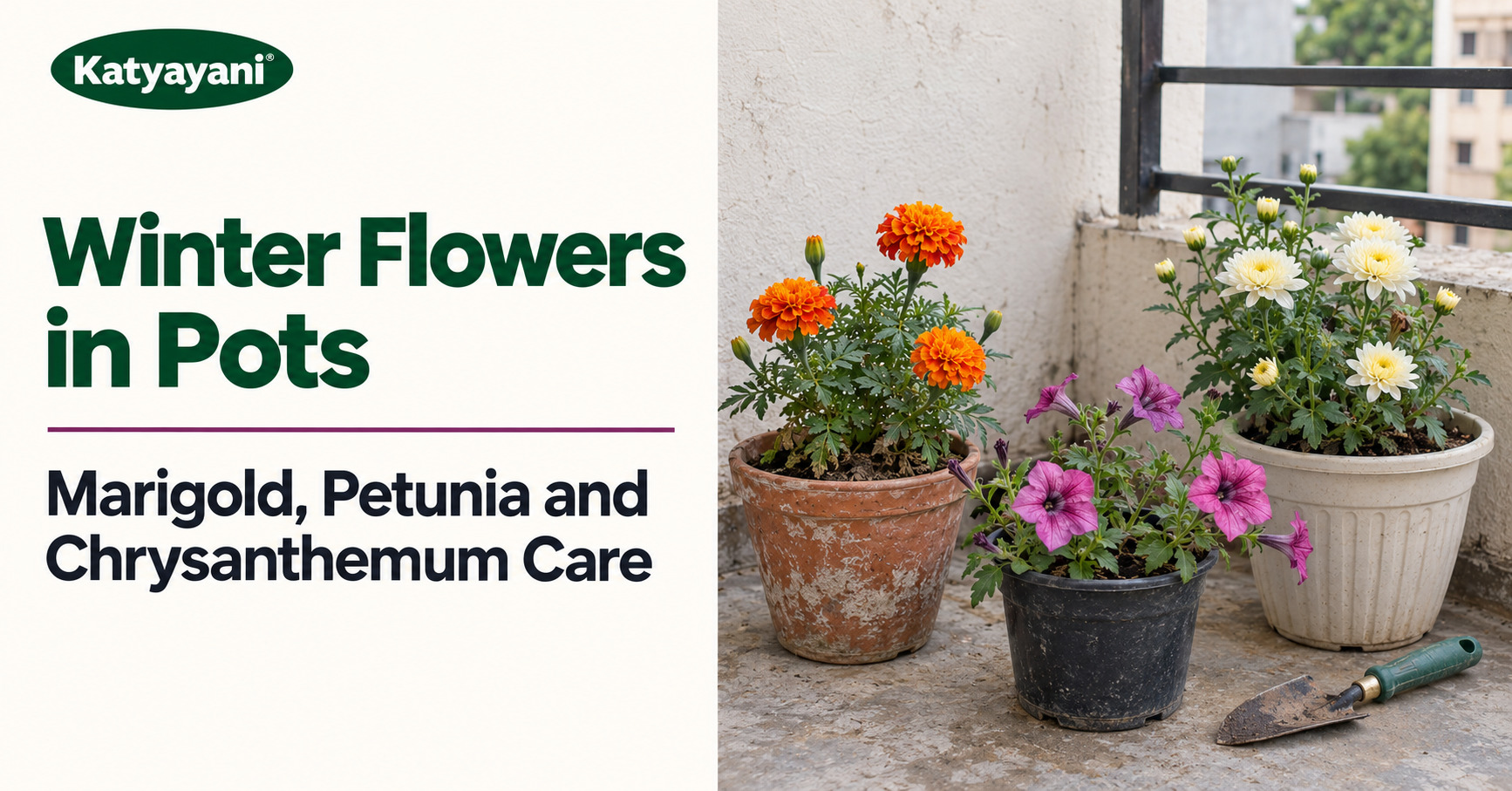
5 minWinter Flowers in Pots: Marigold, Petunia and Chrysanthemum Care
Marigold, petunia and chrysanthemum are the easiest winter flowers for pots in India. Give them 5 to 6 hours of sun, a free-draining mix with compost, 8 to 12 inch pots, and a potassium-rich feed once buds form. Pinch marigold and petunia early for bushy plants and deadhead spent blooms weekly.
 5 min
5 min15 Winter Vegetables to Grow in Pots (Sow in October)
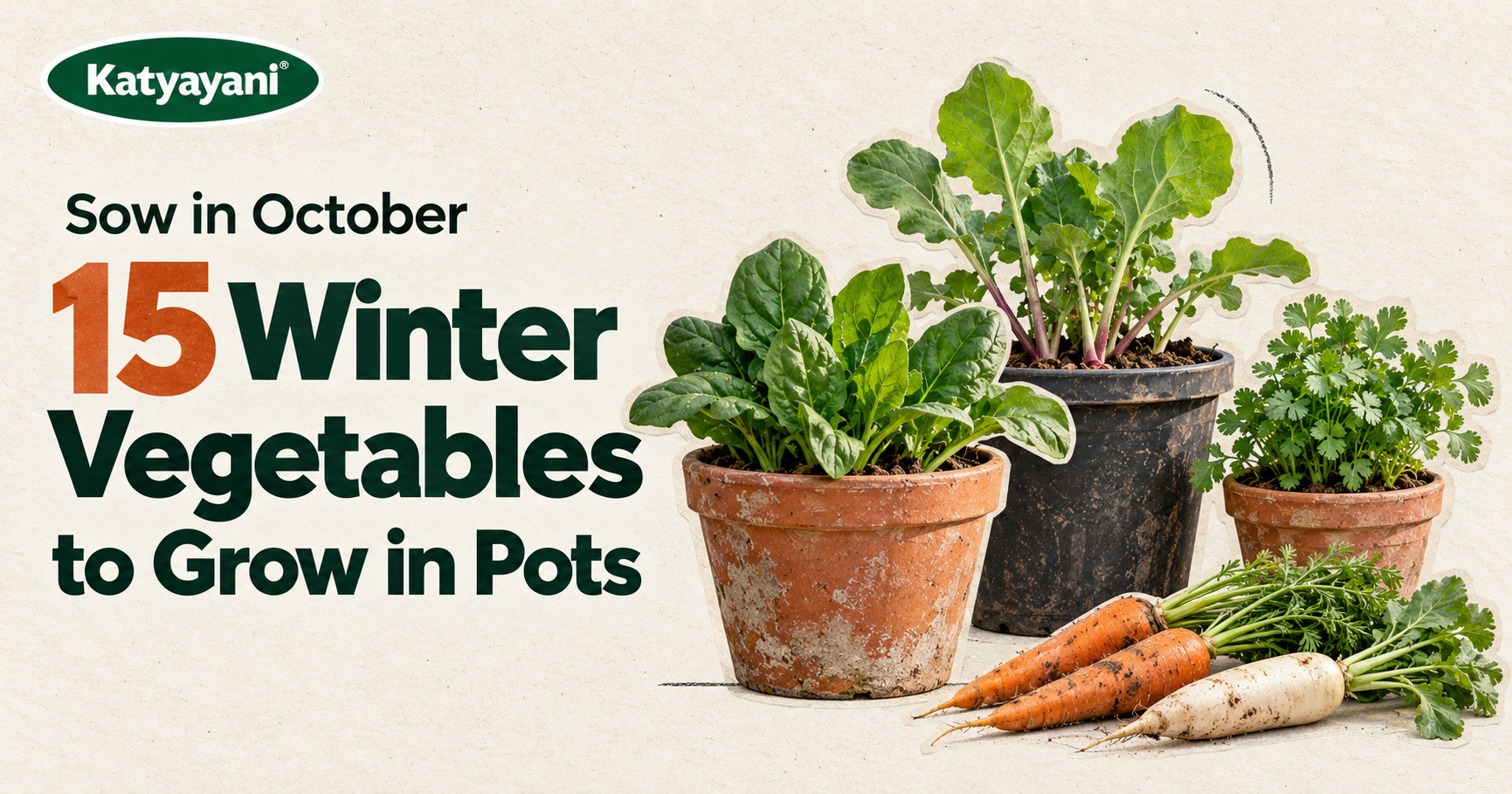
In the Indian plains, October is the month to sow spinach, methi, coriander, radish, carrot, beetroot, turnip, mustard greens, lettuce, peas and spring onion directly in pots, and to raise cauliflower, cabbage, broccoli and knol-khol seedlings. Use 6 to 8 inch pots for greens, 12 inch pots for roots, and 12 to 14 inch pots for cabbage-family crops.
 9 min
9 minTerrace garden soil mix: a recipe that drains and feeds
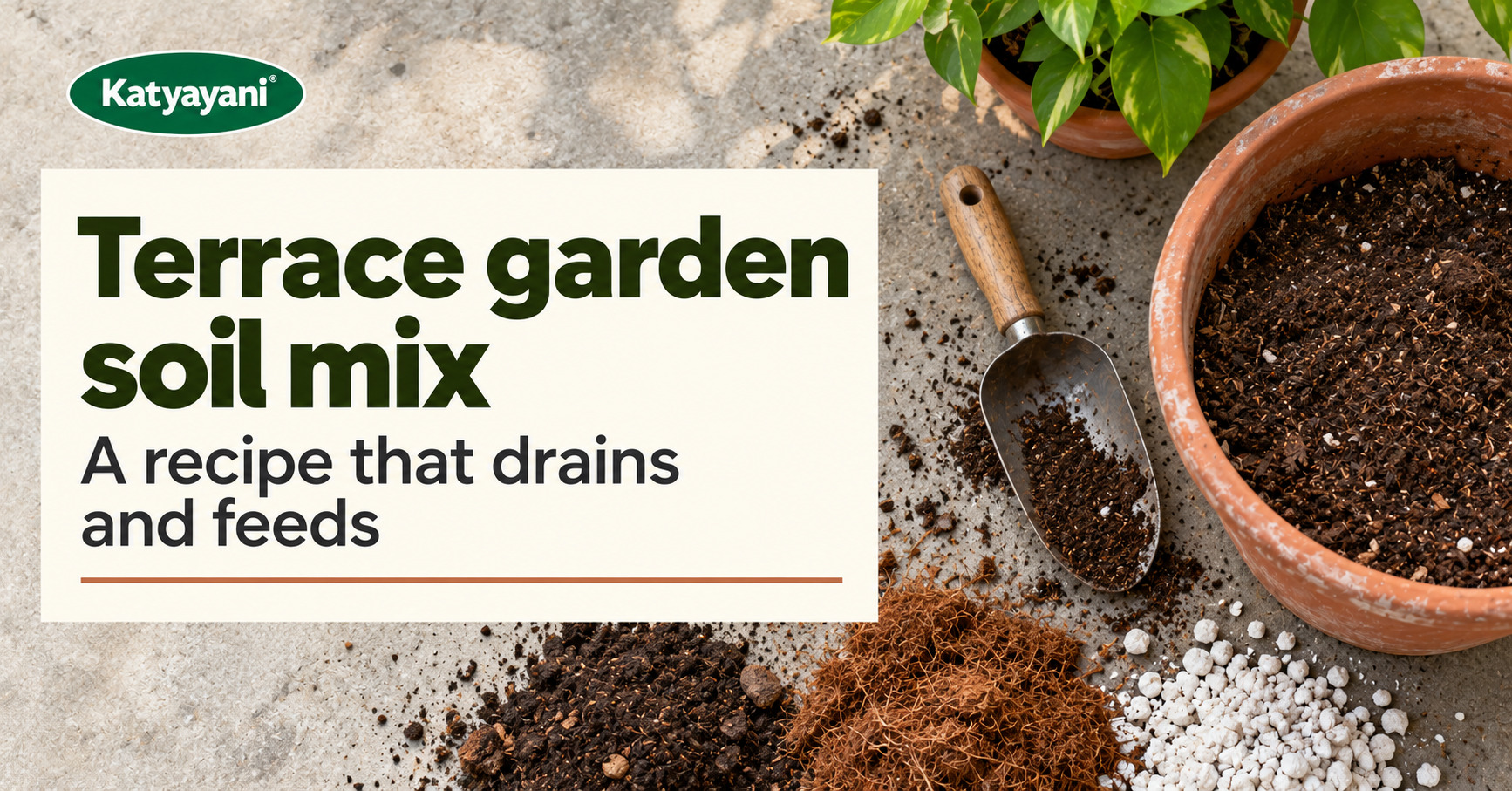
A working terrace mix is roughly 40 percent coco peat for water holding, 30 percent compost for nutrition and biology, and 30 percent perlite or coarse sand for drainage and air. Garden soil should be no more than a quarter of the total, and can be left out completely. The mix must drain within a mi
 8 min
8 minTrichoderma and Beauveria for gardeners: using bio-agents at home
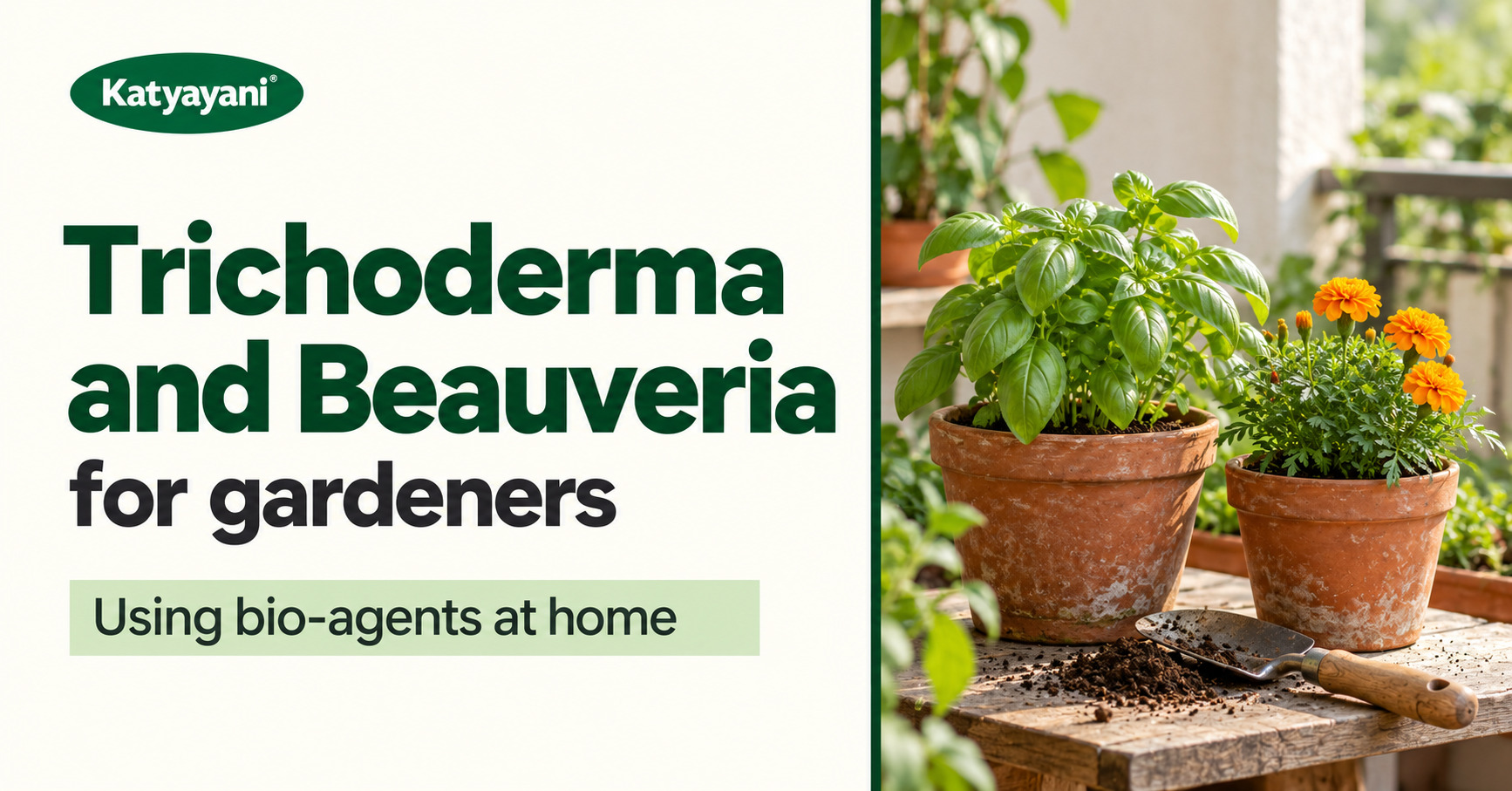
Trichoderma protects roots from soil disease and goes into the potting mix at planting. Beauveria bassiana kills soft-bodied insects and is sprayed on leaves. Both are living fungi, so they need cool storage, evening application, and a gap of at least a week from any chemical fungicide.
 8 min
8 minNeem oil in the home garden: correct dilution and when not to use it
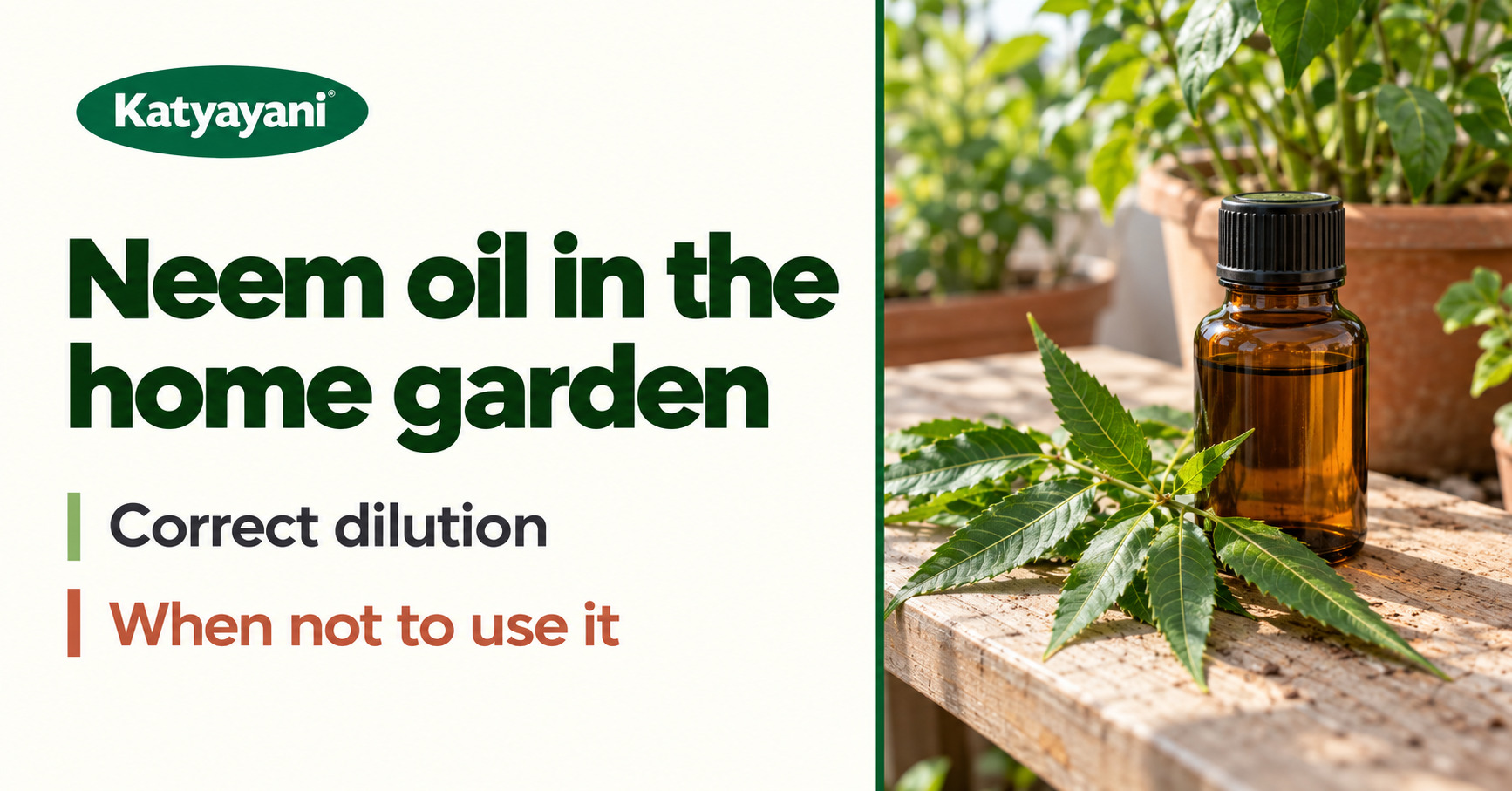
For a 3000 ppm azadirachtin neem oil, use 2 to 3 ml per litre of water for most garden pests. Higher concentrations need proportionally less: around 1 ml per litre at 10000 ppm, and 0.5 to 1 ml per litre at 50000 ppm. Always add an emulsifier, spray in the evening, and never spray a plant that is al
 8 min
8 minOrganic pest control for home gardens: what works without chemicals
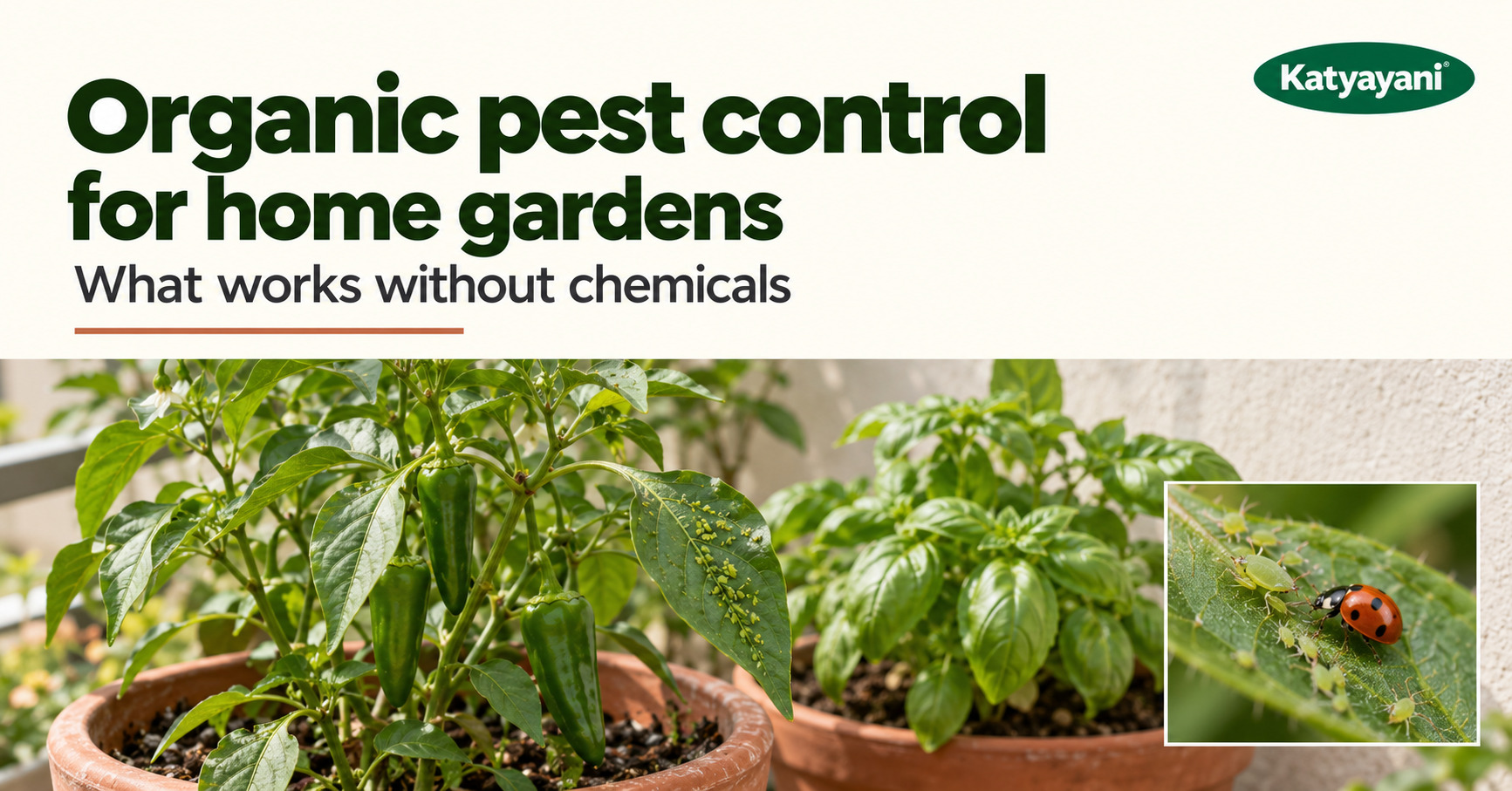
Organic pest control works when you catch the problem early. Neem oil handles soft-bodied insects such as aphids, whitefly and thrips. Fungal bio-insecticides like Beauveria bassiana and Verticillium lecanii handle the same pests more thoroughly but take a week. Insecticidal soap kills on contact. N
 9 min
9 minRoot rot in containers: diagnosis and recovery
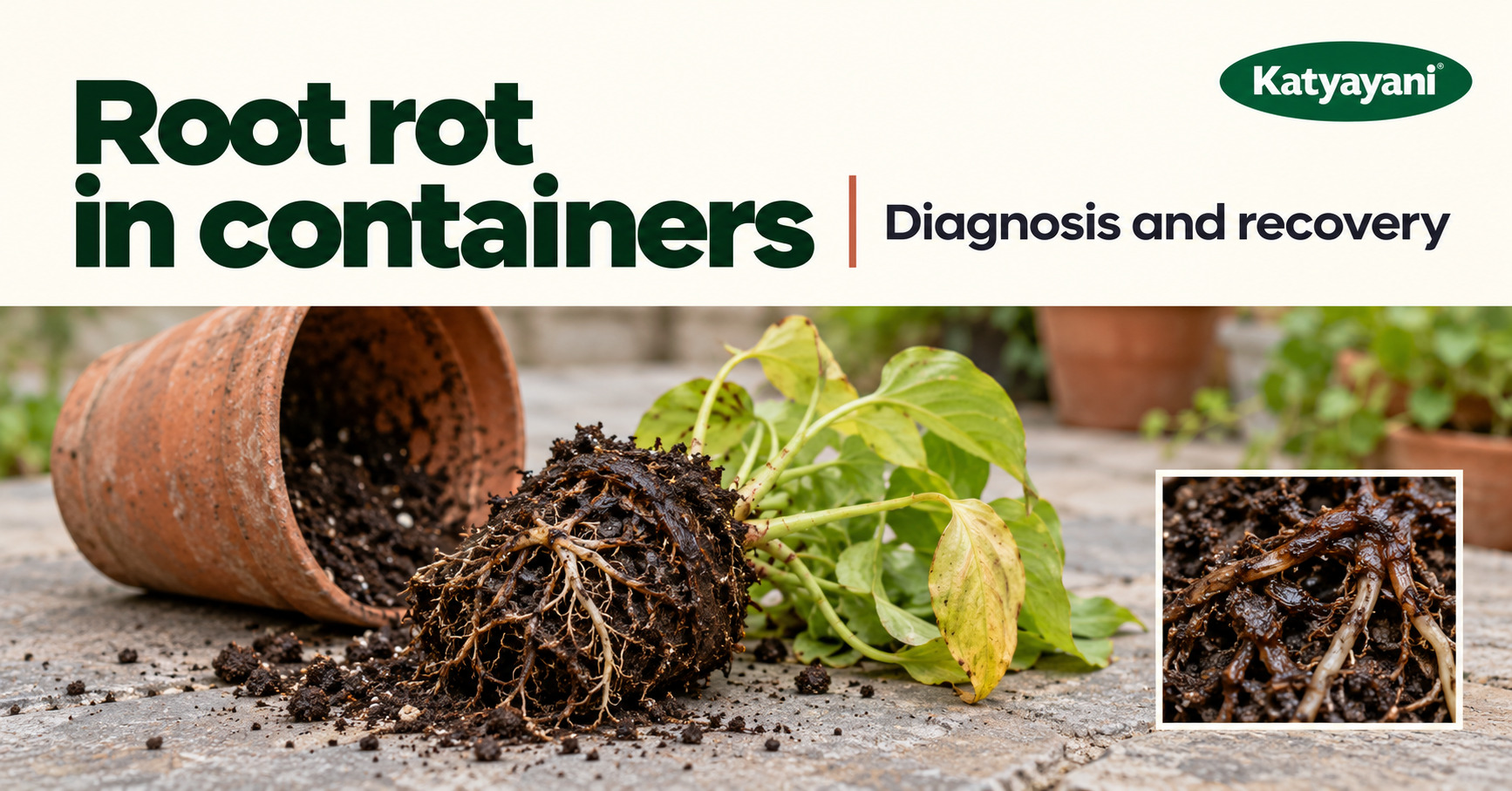
Healthy roots are white or cream, firm, and smell of soil. Rotted roots are brown or black, soft enough to squash between two fingers, and smell sour. If the outer layer slips off leaving a thin thread, that root is dead. Cut away everything rotted, repot into fresh dry mix, and do not water for sev
 9 min
9 minYellow leaves on houseplants: a nutrient deficiency chart
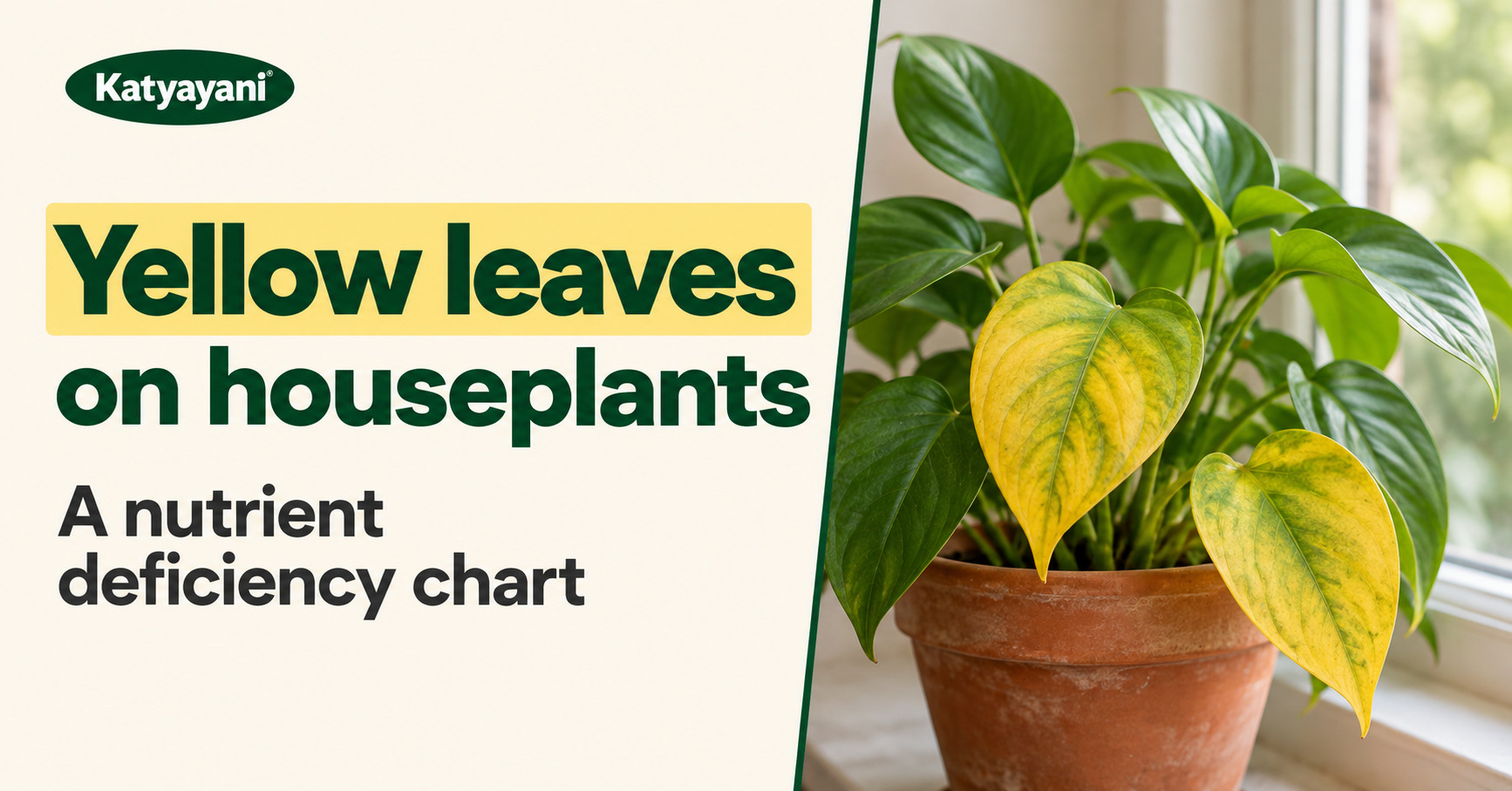
Start with one question: are the old leaves yellowing, or the new ones? Nutrients that move inside the plant, including nitrogen, magnesium and potassium, cause symptoms on old leaves first. Nutrients that cannot move, including iron, zinc and calcium, show on new growth first. That single split nar
 10 min
Growing chillies in pots: from seed to first harvest
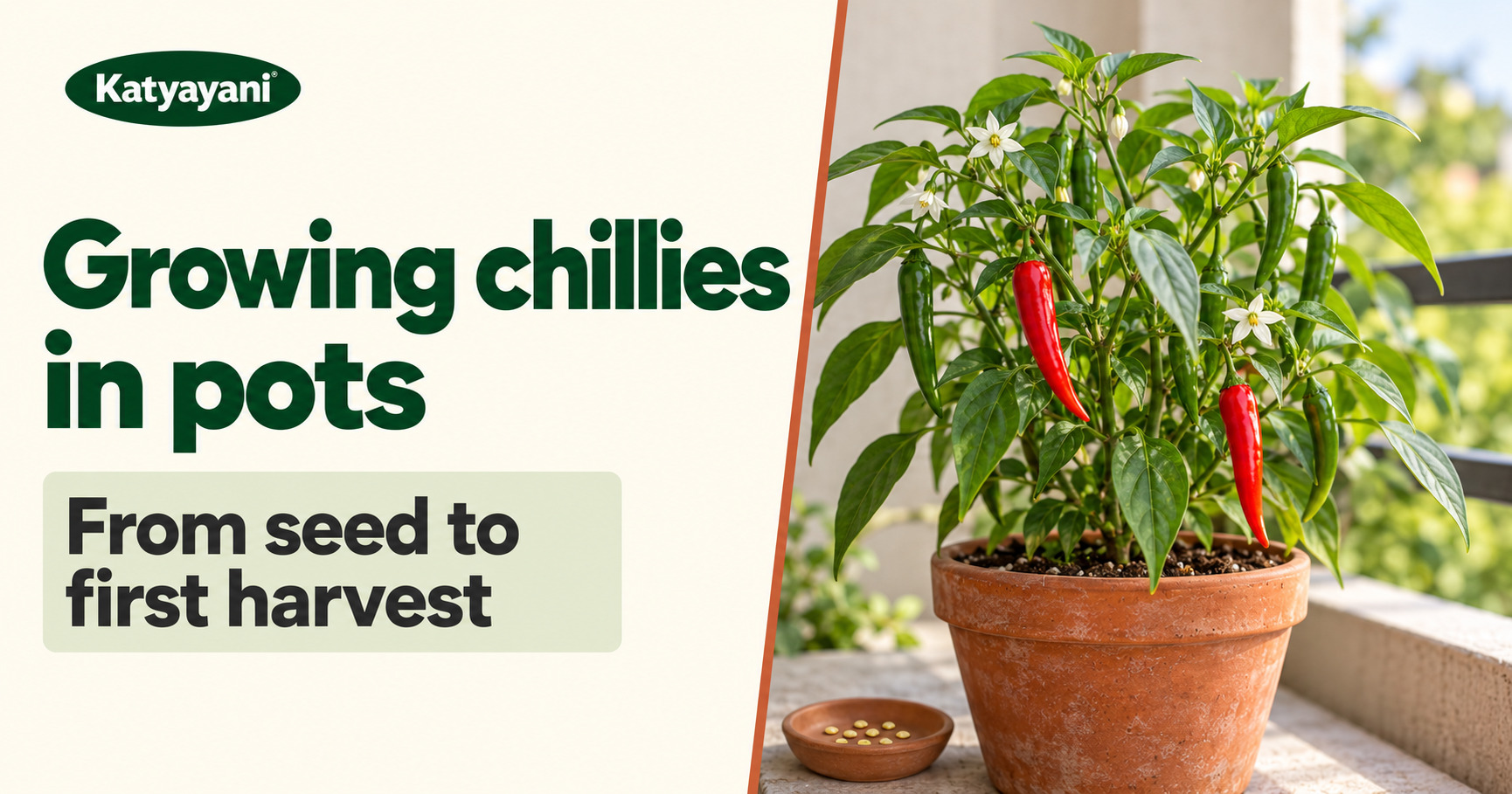
A chilli plant will fruit well in a 25 to 30 cm pot with at least six hours of direct sun. Sow indoors at 25 to 30 degrees Celsius, transplant at the four to six leaf stage, and switch from a balanced feed to a potassium-heavy one as soon as the first flowers open. First harvest comes around 80 to 1
