 9 min read
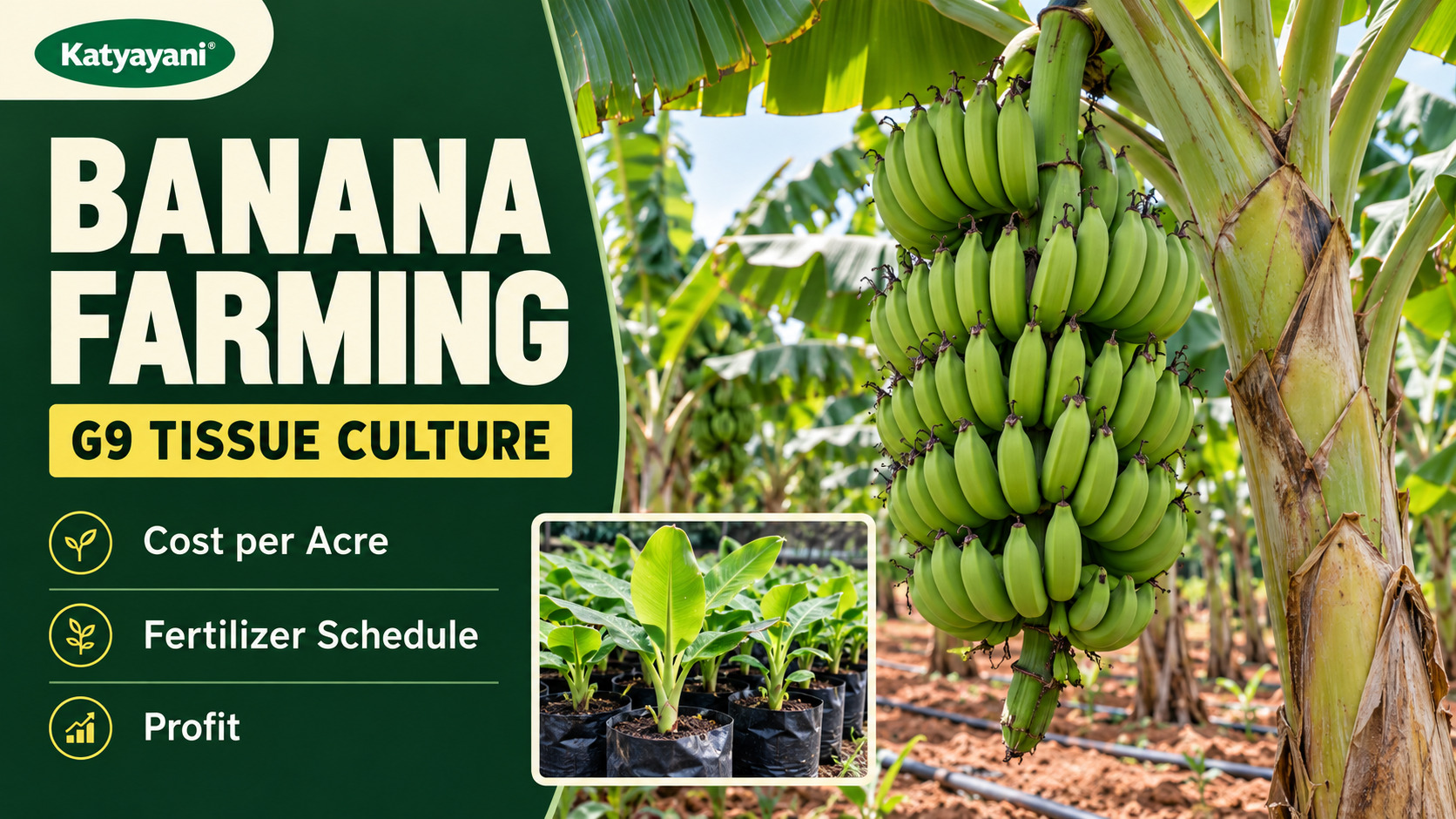
At 1.82 m x 1.82 m spacing, one acre holds about 1,220 G9 plants. Reported yields are about 30 to 35 tonnes per acre in an Andhra Pradesh report and about 32 tonnes per acre in a Gujarat study. ICAR-NRCB gives fertiliser per plant of 200 g N, 30 to 50 g P and 300 to 450 g K in split doses. Reported costs vary from about Rs 87,000 (Gujarat study) to Rs 3 lakh over two years (Andhra report).
How many banana plants in 1 acre? Spacing table
Spacing decides plant count, and plant count decides cost. Sources differ: some nurseries recommend 6 ft x 6 ft, Jain Irrigation suggests 1.8 m x 1.5 m, and NRCB describes paired-row systems for high density. One acre is about 4,047 sq m. Here is the calculation (mine).
| Spacing | Area per plant | Plants per acre (approx) |
|---|---|---|
| 1.82 m x 1.82 m (6 ft x 6 ft) | 3.31 sq m | 1,222 |
| 1.8 m x 1.5 m | 2.70 sq m | 1,499 |
| 1.8 m x 2.0 m | 3.60 sq m | 1,124 |
| Paired row 1.2 x 1.2 x 2 m (NRCB; 5,200 per ha) | - | about 2,100 |
Tighter spacing gives more plants but more competition for light and water, and it needs excellent nutrition and drip. If you are new, 1.82 m x 1.82 m is a safe starting point. Test your soil first: see how to read your soil health card.
Banana farming cost per acre: what sources report
There is no single official G9 figure. These are independent reports, converted to one acre by me where needed (1 hectare = 2.47 acres). They use different cost bases and years, so read them as a range.
| Source | Reported cost | Reported yield | Per acre (converted) |
|---|---|---|---|
| NABARD scheme document, Raebareli (older, about 2018) | Rs 1,02,462 per ha (3,000 plants at Rs 16) | 75 t/ha/year (scheme assumption) | about Rs 41,500; about 30 t |
| Andhra Pradesh press report | up to Rs 3 lakh per acre for two years | 30 to 35 tonnes | Rs 3 lakh over two years; 30-35 t |
| Gujarat (Bharuch) study | Rs 2,14,192 per ha | 790.5 quintals per ha | about Rs 86,700; about 32 t |
| Uttar Pradesh (Gorakhpur) study | about Rs 2.2 lakh per ha | 190-200 quintals per ha | about Rs 89,000; about 8 t |
Why The Gap: Old scheme norms leave out many costs. Press reports often include two-year costs and the ratoon. The Gorakhpur yield looks low because it reflects local farm practice, not a well-run G9 crop. Use the input list in this article, price each item locally and total your own cost.
Banana yield per acre and profit
Sources quote about 30, 40 and 45 kg per plant for G9. A Jain Irrigation figure shows 87.5 tonnes per hectare under drip against 57.5 under flood irrigation, which is about 35 versus 23 tonnes per acre. A Gujarat study shows about 32 tonnes per acre. So a realistic planning range for a well-managed drip crop is about 25 to 35 tonnes per acre, not the 50-plus tonnes some brochures show.
I will not quote a banana price per tonne, because mandi rates change by season and market. Profit = (tonnes sold x price per tonne) - total cost. Use today's local rate, test three prices, and see if the lowest still pays your cost. Compare the payback logic with our dragon fruit farming guide.
Best month to plant G9 banana
In many banana belts, planting is done in the early monsoon (June-July) or after it (September-November), but the right month depends on your state's climate. The aim is to avoid having the plant shoot (flower) in peak cold or peak heat. This is common practice rather than an official table, so confirm with your KVK or the state horticulture department.
Banana fertilizer schedule for tissue culture plants
Banana is a potassium-hungry crop. According to the NRCB FAQ, a banana plant needs about 200 g nitrogen, 30 to 50 g phosphorus and 300 to 450 g potassium, applied in three to five splits. The same FAQ says tissue culture plants need about 50% more fertiliser than conventional suckers, applied in five to seven splits at 30 to 45 day intervals, and that fertigation through drip works well.
| Nutrient | Per plant (NRCB FAQ) | For 1,222 plants (my calculation) |
|---|---|---|
| Nitrogen | 200 g | about 244 kg |
| Phosphorus | 30 to 50 g | about 37 to 61 kg |
| Potassium | 300 to 450 g | about 367 to 550 kg |
The FAQ does not say whether phosphorus and potassium are given as elements or as oxides (P2O5, K2O). Confirm this with a KVK before you buy fertiliser. A tissue culture supplier suggests lower totals (N 150-200 g, P2O5 40-60 g, K2O 200-300 g per plant). So take a soil test, and split doses: small doses early for roots and leaves, more potash as the bunch develops.
Which NPK is best for banana? Katyayani options
Early growth needs nitrogen, and the flowering and bunch stage needs potassium. Water-soluble and potash-rich grades suit drip. These are practical guidelines, not a fixed label dose.
| Stage | What the plant needs | Katyayani option |
|---|---|---|
| Early growth and leaf | Balanced NPK through drip | NPK 19:19:19 water soluble |
| Flowering and bunch development | Potassium with nitrate nitrogen | NPK 13:00:45 and NPK 00:00:50 potassium sulphate |
| Fruit set and finger filling | Boron where tests or symptoms show a need | Boron 20% |
| Soil health before planting | Bio-agent against soil-borne fungi | Trichoderma harzianum bio-fungicide |
Choose the right form with our water-soluble vs granular fertiliser guide and check soil pH and nutrient lock if feed seems to have no effect. Browse the NPK fertilizer collection. Trichoderma is a supportive soil-health step, not a cure for Panama wilt, so use only clean tissue culture plants and good drainage.
Banana farming subsidy
Support for horticulture crops such as banana generally comes through MIDH and state horticulture missions. The pattern is a percentage of a fixed cost norm, so ask your district horticulture officer which rate applies. See the official MIDH site and our agriculture subsidy schemes guide. For loans, read the Kisan Credit Card guide.
Five mistakes that cost banana growers money
- Planting too close without drip and good nutrition.
- Putting all fertiliser in one or two doses instead of splits.
- Skipping potash during bunch development.
- Buying plants from unverified nurseries, which risks wilt and virus.
- Not testing soil before planning fertiliser.
Should you start G9 banana farming?
It suits farmers with reliable water or drip, capital for the first year and a buyer or trader within reach. It is a poor fit if you have no irrigation, heavy waterlogging or no market. Start with one acre, buy plants only from an accredited nursery, and keep records of every input so you can calculate your real cost.
Conclusion
G9 banana can pay, but only with good plants, steady drip, split fertiliser and enough potash. Use the spacing and fertiliser tables to price your own plan, and compare at least three price cases before you plant.
Why trust this guide
Written by Team Katyayani, Editorial Team at Katyayani Organics. Cross-checked against published research and university extension programs.

Leave a Comment