 10 min read
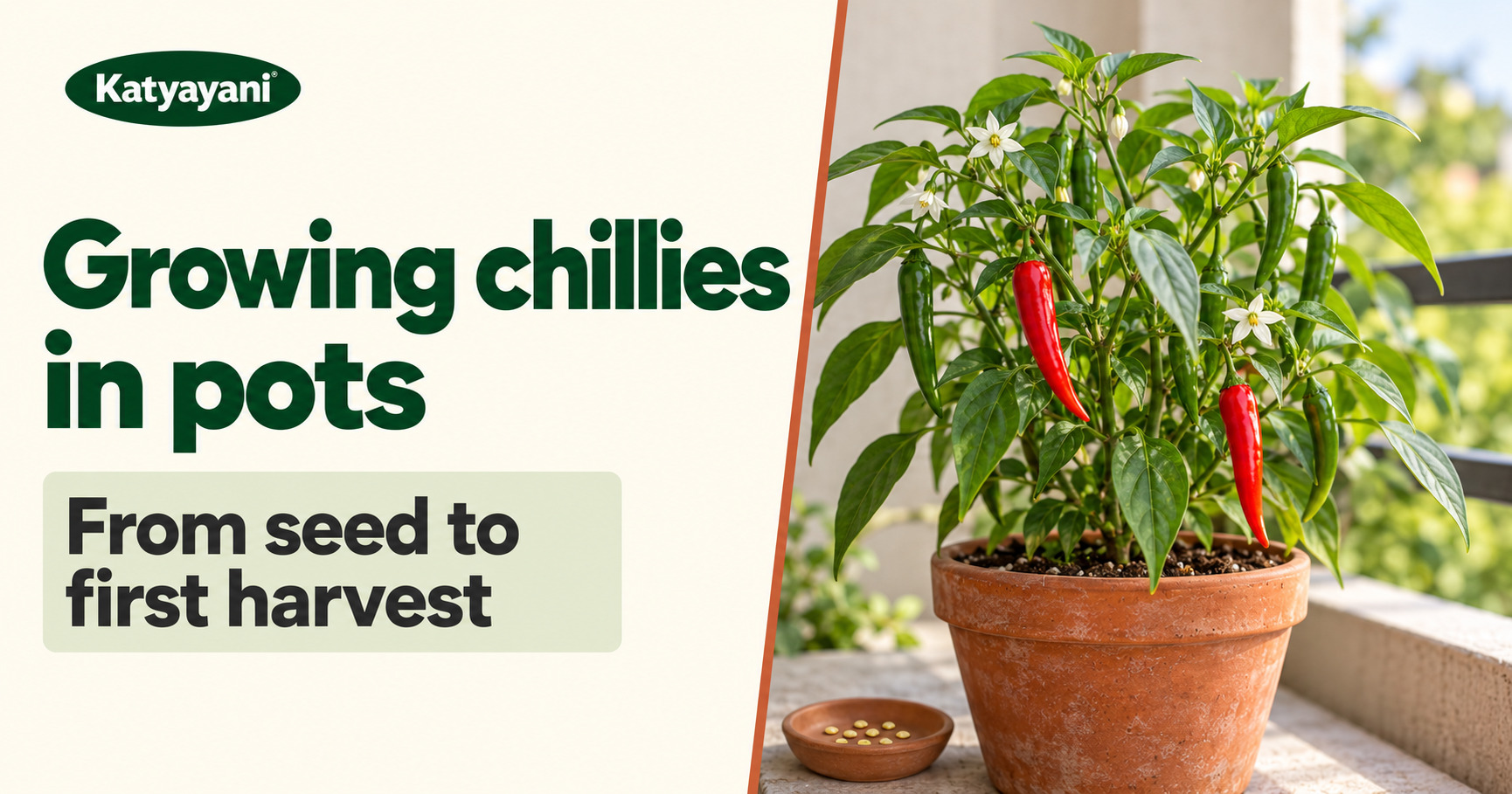
A chilli plant will
fruit well in a 25 to 30 cm pot with at least six hours of direct sun. Sow
indoors at 25 to 30 degrees Celsius, transplant at the four to six leaf stage,
and switch from a balanced feed to a potassium-heavy one as soon as the first
flowers open. First harvest comes around 80 to 100 days after sowing.
Chillies are
one of the few fruiting crops that genuinely prefer container life. They have a
compact root system, they tolerate slight root restriction, and restricting the
pot size actually encourages fruiting. What they do not tolerate is
inconsistent watering, poor drainage, or being fed nitrogen when they should be
getting potassium.
Choosing the pot and the
mix
Pot size sets
the ceiling on plant size. A 20 cm pot gives you a small, early-fruiting plant.
A 30 cm pot gives you a larger plant that fruits a little later but produces
far more over a season. For most varieties, 25 to 30 cm across and at least 25
cm deep is the sweet spot.
Drainage holes
matter more than the pot material. Chilli roots die quickly in waterlogged
conditions, and a decorative pot without holes will kill a healthy plant in
about two weeks.
Do not use
garden soil on its own. It compacts in a container, drains poorly and carries
soil-borne disease. A workable mix is two parts coco peat, one part compost or enriched
vermicompost, and one part perlite or coarse sand. The
University of Maryland Extension has a good primer on why container media
differs from garden soil.
Sowing and germination
Chilli seed
needs warmth, not light, to germinate. The target is 25 to 30 degrees Celsius
at the seed. Below about 20 degrees, germination becomes slow and patchy, which
is why so many first attempts fail on a cool windowsill.
1.
Fill a seed tray with moist coco peat or a fine seed
mix. It should be damp, not wet.
2.
Sow seeds about 5 mm deep and cover lightly.
3.
Cover the tray with a clear lid or a plastic sheet to
hold humidity.
4.
Keep it somewhere warm. On top of a refrigerator or
near a warm wall works.
5.
Expect germination in 7 to 21 days depending on variety
and temperature.
As soon as the
first seedlings appear, remove the cover and move them into strong light.
Seedlings kept warm but dark stretch into weak, leggy stems that never fully
recover.
Transplanting
Move seedlings
to their final pot at the four to six true leaf stage, usually four to six
weeks after sowing. Handle them by the leaf, not the stem. A crushed stem is
fatal; a damaged leaf is not.
Plant slightly
deeper than they were in the tray. Chilli stems produce roots from the buried
section, which gives a sturdier plant.
Water
thoroughly after transplanting, then keep the mix just moist for the next week
while the roots establish. This is the stage where overwatering causes most
losses.
Feeding: the part most
people get wrong
Chillies need
two different feeding programmes in one season, and switching between them at
the right moment is what separates a leafy plant from a productive one.
Through the
vegetative stage, from transplanting until the first flower buds appear, the
plant is building leaves and roots. A balanced NPK
19:19:19 at about 2 g per litre of water, once every 10 to 14 days, covers
this.
When flower
buds form, stop the balanced feed. Nitrogen at this point pushes more leaves
and fewer fruit. Switch to a phosphorus-rich NPK
12:61:00 for two applications to support flowering, then move to a
potassium-heavy NPK
13:00:45 once fruit has set. Potassium drives fruit size, wall thickness
and heat.
|
Stage |
Feed |
Rate and frequency |
|
Seedling, 0 to 4 weeks |
Nothing, or very dilute seaweed |
The mix has enough |
|
Vegetative, 4 to 8 weeks |
NPK 19:19:19 |
2 g per litre, every 10 to 14 days |
|
Bud formation |
NPK 12:61:00 |
1.5 g per litre, two applications |
|
Fruiting |
NPK 13:00:45 |
2 g per litre, every 12 days |
|
Any stage, if leaves yellow |
Chelated micronutrient mix |
1 g per litre as a foliar spray |
A seaweed
extract fortnightly through the whole season is worth adding. It is not a
fertiliser in the NPK sense; it improves root development and helps the plant
hold up under heat and transplant stress.
Watering
Water when the
top 2 to 3 cm of the mix feels dry to a finger. Then water until it runs freely
from the drainage holes.
Do not water on
a fixed schedule. A pot in full summer sun may need water twice a day; the same
pot in cool weather may go three days. Fixed schedules are the most common
cause of both root rot and flower drop.
Inconsistent
watering causes a specific and recognisable problem: the plant drops its
flowers. If your chilli is flowering heavily but nothing is setting, check
whether the pot is drying out completely between waterings.
|
Flower drop has four common causes: the pot drying out
between waterings, night temperatures below 15 or above 32 degrees Celsius,
too much nitrogen, and no pollination. Indoors or on an enclosed balcony, tap
the flowering stems gently every couple of days to move pollen. That alone
fixes many indoor fruiting failures. |
Pruning and support
Pinch out the
growing tip when the plant reaches about 20 cm. This forces side branching and
gives you more flowering points instead of one tall stem.
Remove the very
first flower bud that appears if the plant is still small. Letting a young
plant fruit too early stunts it for the rest of the season.
Taller
varieties need a stake once fruit weight builds. A single bamboo cane and soft
ties is enough.
Pests, and what to do
without reaching for chemicals
Aphids, thrips,
whitefly and spider mites are the usual container problems. All four are far
easier to control early, and all four hide on the underside of leaves. Check
the undersides weekly.
For a home
garden, neem oil is the first response. A neem
oil at 3000 ppm azadirachtin at 2 to 3 ml per litre, sprayed in the evening
and covering leaf undersides, handles early infestations of all four. Repeat
after seven days.
Do not spray in
direct sun, and do not spray a plant that is already wilting from lack of
water. Both cause leaf burn.
Harvest
Most varieties
are ready 80 to 100 days after sowing. You can pick green or wait for full
colour. Colour brings more heat and more sweetness, but leaving fruit on the
plant slows down new flowering.
Cut rather than
pull. Chilli stems are brittle and pulling often takes a branch with the fruit.
Picking
regularly keeps the plant producing. A plant left loaded with ripe fruit will
stop setting new flowers.
If something goes wrong
•
Leaves yellowing from the bottom up: usually nitrogen
shortage or overwatering. Check drainage first.
•
New leaves yellow with green veins: iron or
micronutrient shortage, common in alkaline tap water areas. A chelated
micronutrient foliar spray corrects it within a week.
•
Flowers drop without setting: irregular watering,
temperature stress, excess nitrogen, or no pollination.
•
Fruit with sunken dark patches at the tip: blossom end
rot, caused by calcium not reaching the fruit. It is nearly always a watering
consistency problem rather than a calcium shortage.
•
Leaves curling upward with tiny insects underneath:
aphids or thrips. Treat early.
Start the next batch of seed about eight weeks before your current plants finish. Chillies are perennial in frost-free climates and will crop for several years, but production drops after the second season.
Why trust this guide
Written by Team Katyayani, Editorial Team at Katyayani Organics. Cross-checked against published research and university extension programs.

Leave a Comment