 6 min read
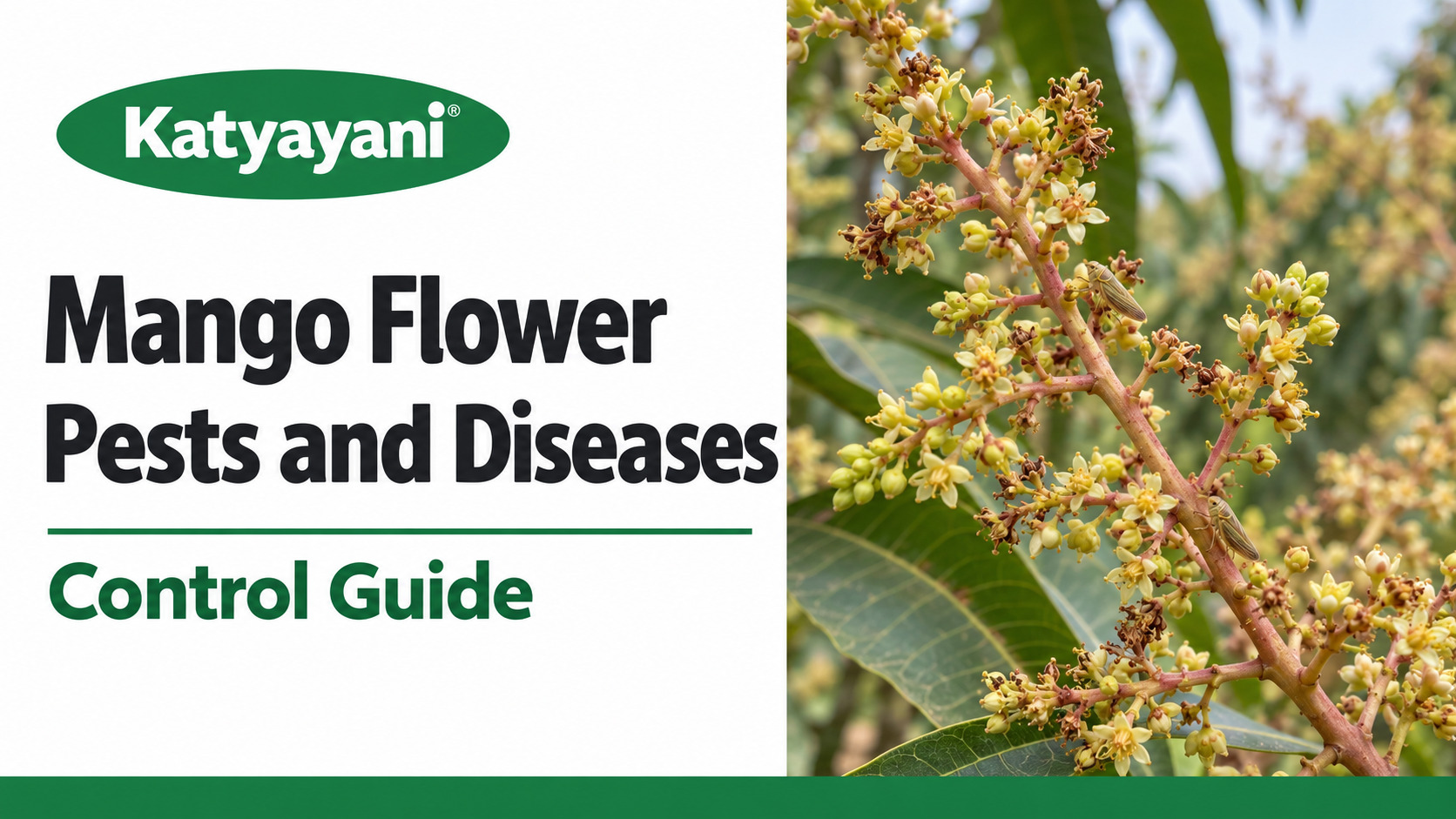
Protect mango flowers from panicle emergence to just before full bloom. Control hoppers, mealy bug, powdery mildew and anthracnose with timed sprays, but stop at full bloom so bees can pollinate.
When do mango trees flower and why does spraying time matter?
Mango flowers usually open from December to March, depending on the region, and fruit starts to form from January to May. Pests and diseases that attack the flower stalk can wipe out most of the crop. The spray window is from panicle emergence to full bloom. At full bloom insects pollinate the flowers, so pesticide and fungicide sprays should be avoided at that stage.
Which pests attack mango flowers and how to control them?
| Pest | Damage | What to do |
|---|---|---|
| Mango hopper | Sucks sap, flowers dry and drop; honeydew causes sooty mould | First spray at panicle emergence, second after about 15 days. Neem-based or thiamethoxam-based options. See Thioxam |
| Flower gall midge | Maggots eat the bud from inside; buds do not open | 3-5 sprays at 15-30 day gaps. Thiamethoxam 25% WG at 0.3-0.5 g per litre is listed in a trade guide |
| Mealy bug | Pink insects dry the flower stalk | Pre-bloom sprays at 15-30 day gaps; neem oil such as Activated Neem Oil |
| Flower webber | Larva ties flowers and bores the stalk | 3-5 sprays at 15-30 days. A trade guide lists Chakrawarti at 0.4 mL per litre |
Neem and bio-products are a good first line. Chemical options should follow the label and your local agriculture office's advice.
Which diseases attack mango flowers and how to control them?
| Disease | Symptom | What to do |
|---|---|---|
| Powdery mildew | White powder on flowers; flowers drop. Worse in cool, humid weather | 2-3 sprays at about 15-day gaps during flowering. Wettable sulphur 0.2% is recommended by TNAU. Katyayani options: Sulfotop 80 Sulphur 80% WDG, Tebusul |
| Anthracnose (blossom blight) | Black spots on flowers, flowers shed, worse in rain and humidity | Spray at about 15-day gaps during flowering. Copper oxychloride such as COC 50 is a common option |
| Malformation | Flower buds turn into a bunch of small leaves (witch's broom) | Prune and burn malformed panicles. Bio-agents such as Trichoderma viride are used in trade guides. No single chemical cure |
Avoid too much nitrogen. Soft, over-fed growth invites powdery mildew.
Which products help flowering and fruit set?
- Fast Paclobutrazol 23% SC is a growth regulator used in mango to help regular flowering. It is applied to the root zone, not on leaves. Dose depends on tree age, so follow the pack.
- Boron 20% supports flower and fruit set when deficient.
- Foliar nutrients can be given every 7-10 days as per a trade guide, but keep them away from the full-bloom stage if mixing with sprays.
What is a simple spray plan for mango flowering?
| Stage | Action |
|---|---|
| Before flowering (Nov-Dec) | Prune dry and diseased shoots. Clean the orchard. |
| Panicle emergence | 1st spray for hoppers and powdery mildew (neem or recommended insecticide + sulphur/fungicide) |
| About 15 days later | 2nd spray if hoppers or mildew continue |
| Full bloom | No pesticide or fungicide sprays. Let bees pollinate |
| Fruit set (pea size) | Resume protection as needed, based on pest scouting |
Why must you not spray at full bloom?
Mango is pollinated by bees, flies, ants, wasps, beetles and other insects. Spraying at full bloom can kill the pollinators and cut fruit set. If you must spray, do it in the evening and use the safest option on the label.
Conclusion
A good mango crop is decided at flowering. Scout early, spray hoppers and mildew from panicle emergence, stay out of the orchard with sprays at full bloom, and use labelled doses. Check local advice from your state agriculture university before each season.
Why trust this guide
Written by Team Katyayani, Editorial Team at Katyayani Organics. Cross-checked against published research and university extension programs.

Leave a Comment