 8 min read
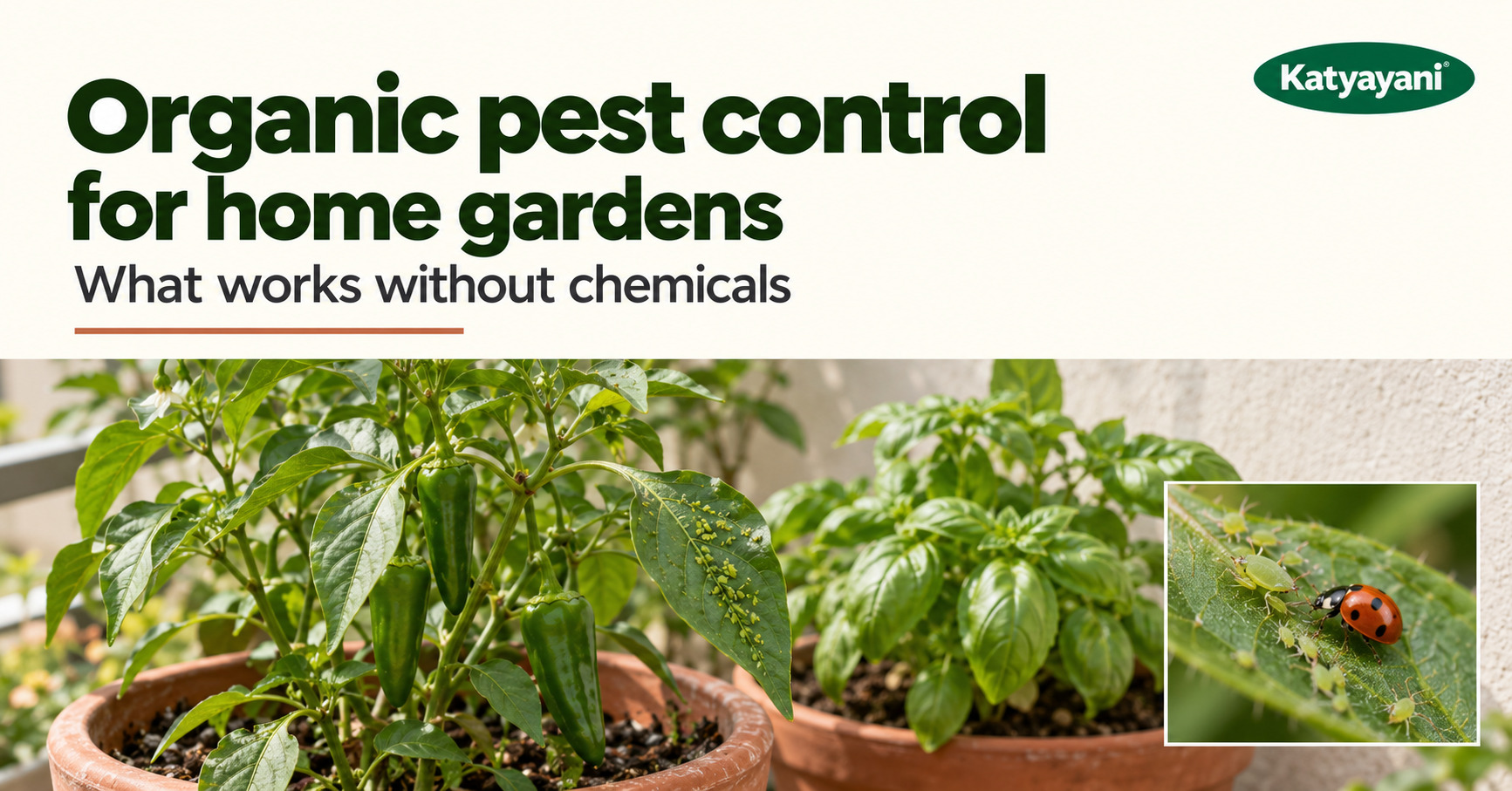
Organic pest control
works when you catch the problem early. Neem oil handles soft-bodied insects
such as aphids, whitefly and thrips. Fungal bio-insecticides like Beauveria
bassiana and Verticillium lecanii handle the same pests more thoroughly but
take a week. Insecticidal soap kills on contact. None of them will clear a
heavy infestation in one spray.
The honest
starting point is that organic control asks more of you than a chemical spray
does. It requires you to look at your plants regularly, act at the first sign,
and repeat the treatment. In exchange you get produce with no residue, no
waiting period before eating, and no harm to the bees and ladybirds already
working in your garden.
What follows is
what genuinely works, and what to skip.
Identify before you spray
Almost every
organic control failure comes from spraying the wrong thing at the wrong pest.
Spend two minutes with the plant before you mix anything.
|
What you see |
Likely pest |
Where to look |
|
Curled new leaves, sticky residue, ants |
Aphids |
Growing tips and leaf undersides |
|
Tiny white flies rising when disturbed |
Whitefly |
Leaf undersides |
|
Silvery streaks and distorted flowers |
Thrips |
Inside flowers and buds |
|
Fine webbing, stippled pale leaves |
Spider mites |
Leaf undersides, dry conditions |
|
Ragged holes chewed in leaves |
Caterpillars |
Undersides, at night |
|
Brown or white bumps on stems |
Scale insects |
Stems and leaf joints |
|
Seedlings cut off at soil level |
Cutworms |
Top few cm of soil |
Sticky yellow
traps hung at plant height will tell you what is flying around before you can
see damage. They cost very little and they turn guesswork into a decision.
The controls that work
1. Neem oil
The most useful
single product for a home garden. Azadirachtin, the active compound, disrupts
feeding and moulting in young insects. It works on aphids, whitefly, thrips,
mites, leafhoppers and young caterpillars. A neem
oil at 3000 ppm azadirachtin at 2 to 3 ml per litre of water covers most
home garden situations.
It is not a
knockdown spray. Insects stop feeding within a day but populations take one to
two weeks and two or three applications to collapse. Spray in the evening,
cover leaf undersides, and repeat every seven days while pressure lasts.
2. Fungal bio-insecticides
These are
living fungi whose spores stick to an insect, germinate and grow through its
cuticle. They are more thorough than neem because they keep working after the
spray dries, and infected insects spread the fungus to others. Beauveria
bassiana covers a broad range including aphids, whitefly and thrips. Verticillium
lecanii is particularly effective on aphids, whitefly and scale. Metarhizium
anisopliae works on soil-dwelling stages including grubs and termites.
Where you have
more than one pest at once, a combined Triple
Attack formulation carries all three organisms in one spray. Cornell's fact
sheet on Beauveria explains the mode of action and the conditions it needs, and
it is worth reading before your first application. It
is available here.
These need
humidity and moderate temperature. They perform poorly in dry heat above about
35 degrees Celsius, and ultraviolet light destroys the spores, so evening
application is not optional.
3. Insecticidal soap
Potassium salts
of fatty acids dissolve the outer layer of soft-bodied insects. It kills only
what it touches and leaves nothing behind, which makes it safe but also means
coverage has to be complete. Useful as a fast knockdown before a slower
biological takes over. Do not use ordinary dish detergent as a substitute; it
strips the leaf cuticle and causes burn.
Physical and cultural methods
A strong jet of
water dislodges aphids and mites and is genuinely effective for a small number
of plants. Hand-picking caterpillars in the evening works better than any
spray. Row covers keep whitefly and leaf miners off young plants entirely. None
of these cost anything.
|
Encourage what already eats your pests. Ladybirds,
lacewings, hoverflies and predatory mites live in most gardens and do more
work than any spray. Broad-spectrum insecticides kill them along with the
pest, which is why chemical gardens usually need more spraying each year, not
less. |
What to skip
Garlic and
chilli sprays repel some insects briefly but do not reduce a population. Useful
as a supplement, useless as a treatment.
Dish soap
sprays damage leaves. Household detergents are not formulated for plant
contact.
Companion
planting has real but limited effects. Marigolds do suppress some soil
nematodes. They do not protect a tomato plant from whitefly.
Coffee grounds,
eggshells and similar kitchen remedies do very little for pests, whatever the
internet says about them.
Building a programme
instead of reacting
Spraying only
when you notice damage means you are always behind. A simple preventive routine
keeps populations from ever building.
1.
Check plants once a week, looking specifically at leaf
undersides and growing tips.
2.
Hang two or three sticky traps so you see flying pests
before damage appears.
3.
Apply neem every 10 to 14 days as a preventive during
the main growing season, not just when something goes wrong.
4.
Switch to a fungal bio-insecticide when you see the
first insects, and repeat after seven days.
5.
Remove and bin badly infested leaves rather than trying
to save them.
6.
Keep plants well spaced so air moves between them.
Crowded plants have more pest and disease problems than fed or watered ones.
Disease follows
a similar logic. A preventive Bacillus
subtilis spray handles early leaf spot, blight and mildew in a home garden,
applied before the disease establishes rather than after.
Application details that
decide whether it works
•
Spray in the evening or very early morning. Midday sun
destroys biological spores and causes oil burn.
•
Cover the undersides of the leaves. Most pests live
there and most sprays never reach them.
•
Do not spray a wilting plant. Water it first, wait a
few hours, then spray.
•
Mix fresh each time. Biological products lose viability
in the tank within hours.
•
Keep at least a week between a fungicide and a fungal
bio-insecticide, or the fungicide will kill the organism you just paid for.
•
Repeat. One application of an organic control is almost
never enough.
Cornell
maintains a practical index of the biological control organisms available to
growers and how each one is used. It
is a good reference to keep.
Set a weekly reminder to look at your plants. The single biggest factor in whether organic control works is not which product you buy, it is how early you notice.
Why trust this guide
Written by Team Katyayani, Editorial Team at Katyayani Organics. Cross-checked against published research and university extension programs.

Leave a Comment