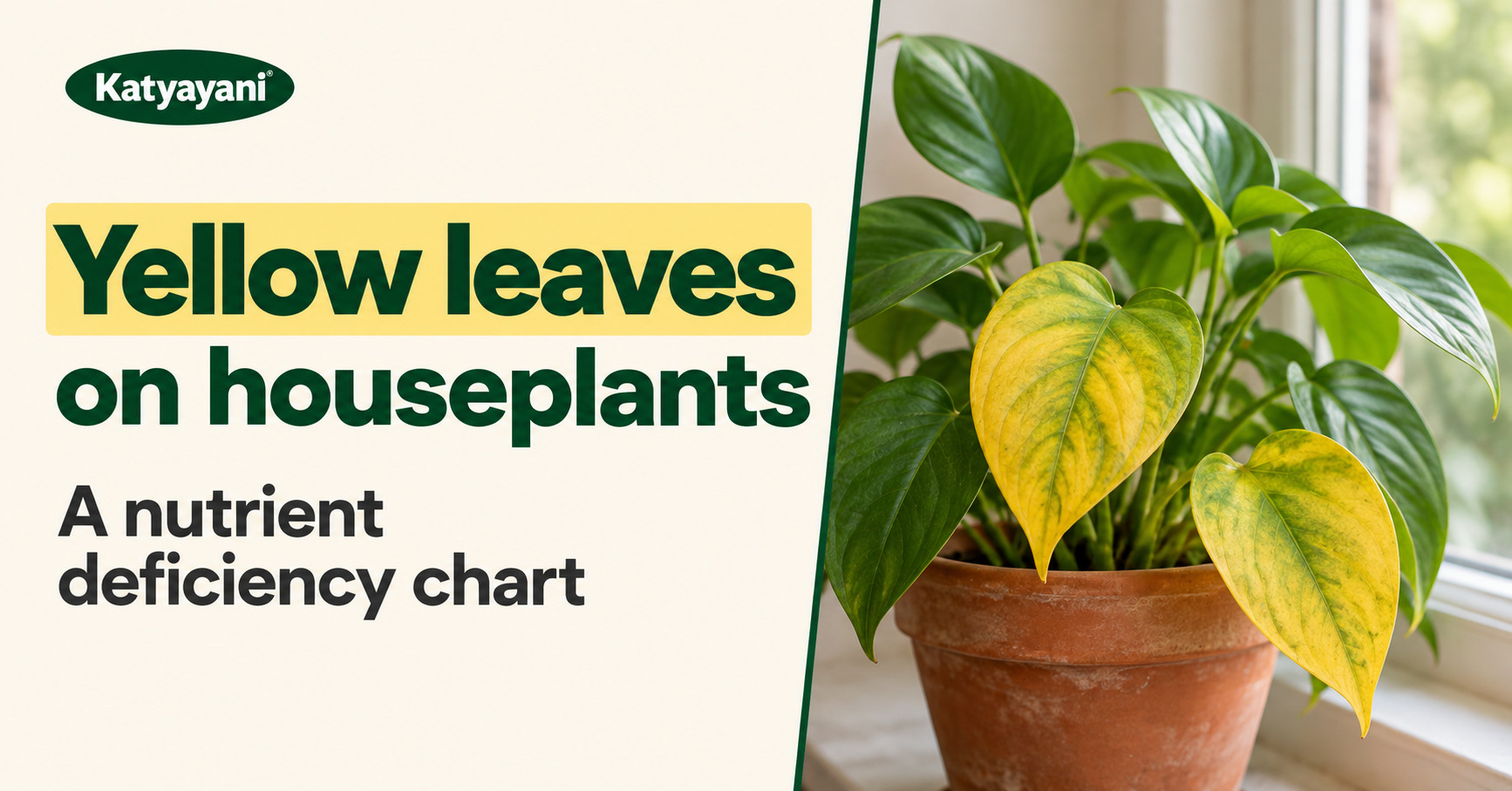
 9 min read
Start with one
question: are the old leaves yellowing, or the new ones? Nutrients that move
inside the plant, including nitrogen, magnesium and potassium, cause symptoms
on old leaves first. Nutrients that cannot move, including iron, zinc and
calcium, show on new growth first. That single split narrows the diagnosis by
more than half.
Yellow leaves
are the most common plant complaint and the most commonly misdiagnosed. The
usual response is to add a general fertiliser, which helps in maybe a third of
cases and does nothing in the rest. The pattern of the yellowing tells you far
more than the fact of it.
First, rule out the causes
that are not nutritional
Before reading
the chart, check three things. Overwatering is the single most common cause of
yellow leaves on indoor plants, and it looks similar to nitrogen shortage. If
the mix is soggy and the yellow leaves feel soft rather than dry, water is the
problem, not fertiliser.
Low light
causes even, gradual yellowing on the leaves furthest from the light source.
Adding nutrients to a plant sitting in a dark corner makes no difference.
Natural ageing
accounts for one or two lower leaves yellowing on an otherwise healthy plant.
That is normal and needs no action.
|
The quick test: if you cannot decide between overwatering
and a deficiency, lift the pot. A pot that feels heavy several days after
watering is holding too much water. Fix the drainage before you fix the
nutrition. |
The deficiency chart
Work down this
table using the location of the symptom first, then the pattern.
|
What you see |
Where |
Likely cause |
What to do |
|
Whole leaf pale, then yellow, evenly |
Old leaves first |
Nitrogen |
Balanced NPK feed at label rate; response in 7 to 10 days |
|
Yellow between veins, veins stay green |
Old leaves first |
Magnesium |
Epsom salt at 1 g per litre, or a micronutrient mix |
|
Yellow between veins, veins bright green |
New leaves first |
Iron |
Chelated iron as a foliar spray; check pH of water |
|
Small new leaves, short spacing, yellow mottling |
New leaves |
Zinc |
Chelated zinc, foliar |
|
Yellow or brown scorched leaf edges |
Old leaves |
Potassium |
Potassium-rich feed; also check for salt buildup |
|
Growing tip dies, new leaves deformed |
New growth |
Calcium or boron |
Steady watering; boron only at very low rates |
|
Purple or reddish tinge, slow growth |
Old leaves |
Phosphorus |
Phosphorus-rich feed; common in cold conditions |
|
Pale overall, mix stays wet, soft leaves |
Anywhere |
Overwatering |
Not a deficiency. Improve drainage and reduce frequency |
The three you will
actually meet most often
1. Nitrogen
Even, pale
yellowing that starts at the bottom of the plant and moves up. The plant is
moving nitrogen out of old leaves to feed new growth, which is why the pattern
is so consistent. Any balanced feed corrects it. A water-soluble
NPK 19:19:19 at 1 to 2 g per litre works, and you should see new green
within a week.
Nitrogen
shortage is normal in a plant that has been in the same potting mix for more
than a year. Potting mix is not soil; it holds very little nutrient reserve.
2. Iron
Bright yellow
leaf with a clear network of green veins, appearing on the newest leaves while
older leaves stay green. This is the most distinctive pattern on the chart and
the easiest to recognise once you have seen it.
The cause is
usually not a lack of iron but alkaline water or mix locking it up. Hard tap
water above pH 7.5 causes this reliably. The fix is chelated
iron EDTA as a foliar spray at about 1 g per litre, which bypasses the soil
chemistry entirely. Response is visible in five to seven days on new growth.
Old damaged leaves will not turn green again.
3. Magnesium
When more than one
nutrient is short
Mixed symptoms
across old and new leaves usually mean the mix is exhausted rather than short
of one specific element. In that case a chelated
mix micronutrient covering zinc, iron, manganese, copper, boron and
molybdenum is more sensible than guessing at individual elements. Apply as a
foliar spray at about 1 g per litre.
Adding a humic
and fulvic acid to the watering can improves what the roots can take up
from an old, tired mix. It is not a fertiliser, but on a plant that has been in
the same pot for two years it often produces more visible improvement than
adding more feed.
A fortnightly seaweed
extract helps a recovering plant push new roots, which is what actually
ends the problem.
How to apply a correction
to a houseplant
1.
Mix at the lower end of the label rate. Houseplants in
small pots burn easily and the margin for error is smaller than in a garden
bed.
2.
Spray in the evening or early morning, never in direct
sun.
3.
Cover the underside of the leaves. That is where most
absorption happens.
4.
Water the pot lightly first if the mix is bone dry, so
the plant is not stressed when you feed it.
5.
Wait a full week before judging the result. Nothing
works in two days.
Do not correct
three things at once. If you spray iron, magnesium and a general feed together
and the plant improves, you have learned nothing about what was wrong.
When it is time to repot
instead
If a plant has
been in the same mix for more than two years, if water runs straight through
without wetting the mix, or if you can see a white salt crust on the surface,
feeding will not solve it. The mix has broken down and lost structure.
Repot into
fresh medium, trim any dead roots, and hold off on fertiliser for three weeks
while the plant re-establishes.
Michigan State
University Extension sets out a clear diagnostic sequence for this, including
how to separate deficiency from root damage. It
is a useful cross-check before you treat. The RHS also maintains a
good visual reference for the individual deficiencies.
Take a photograph of the leaf when you first notice yellowing, and another a week after treatment. Memory is unreliable about colour, and the comparison tells you whether the diagnosis was right.
Why trust this guide
Written by Team Katyayani, Editorial Team at Katyayani Organics. Cross-checked against published research and university extension programs.



Leave a Comment